PRACTICE
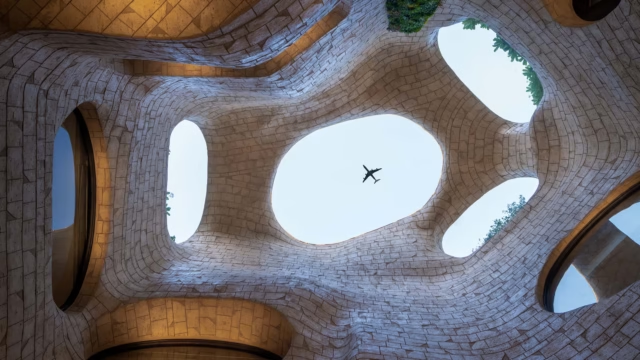
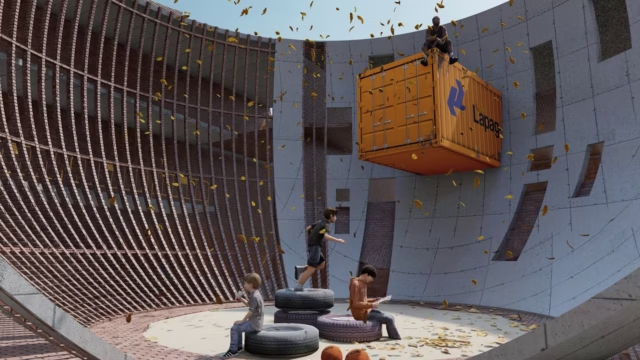
MOFA Studio is a collective of optimistic non-conformists who champion possibility over rigidity. Founded in 2007 by architect Manish Gulati, the studio has pioneered fluid architecture through computational design in India.
As a practice, MOFA Studio questions fixed systems that limit human potential, challenges binary thinking that oversimplifies lived experience, and refuses hierarchies that constrain rather than enable. This stance is rooted in the conviction that fluidity creates the essential conditions for life to adapt, evolve, and thrive in ways rigid frameworks simply cannot accommodate.
Over nearly two decades, the studio has developed a five-dimensional framework that translates this philosophy into practice: Spatial, Ecological, Intersectional, Temporal, and Systemic fluidity. Each dimension serves as a measurable marker of impact on people, place, and ecology, ensuring architecture responds rather than dictates.
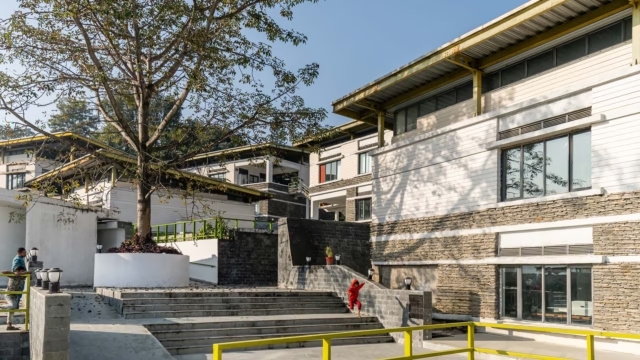
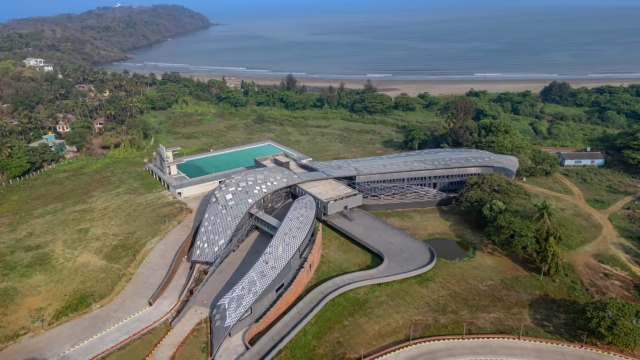
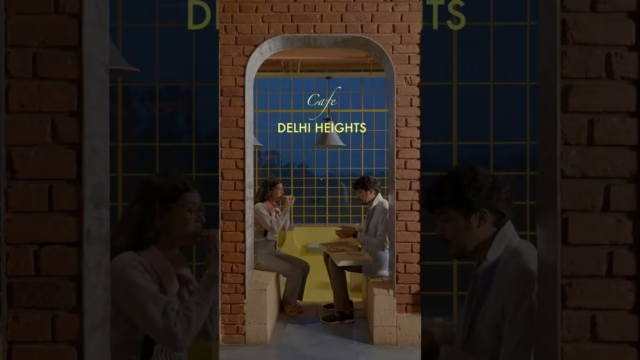
The studio’s diverse portfolio spans over 250 projects across urbanism, architecture, interiors, and products, including institutional campuses for private and government entities, sports infrastructure, hospitality, housing, and high-end residential projects.
FOUNDER
Manish Gulati is the Principal Architect and Founder of MOFA Studio, which he established as India’s pioneering practice in parametric and computational design. Under his leadership, the New Delhi-based studio has delivered over 250 projects spanning institutional campuses, sports infrastructure, hospitality, and residential sectors, earning more than 75 national and international awards.
At the heart of Gulati’s work is a belief that architecture must remain fluid, adaptive, and deeply human. He has shaped MOFA Studio on the premise that, based on his acute observation of Indian homes, rooms and rituals effortlessly blur functional boundaries, revealing an inherent adaptability that rigid modern frameworks often overlook. For Gulati, architecture is, at its core, an open system that trusts the grey areas where life truly unfolds.
Fascinated by emerging technologies, he is at the forefront of integrating AI and other advanced technologies into architectural practice in India. Under his leadership, MOFA Studio is one of the few Indian firms actively experimenting with AI and computation as catalysts for creativity rather than mere productivity tools. He views technology as a form of liberation—freeing architects to focus on intent, intuition, and invention. The studio harnesses AI and computational methods to expand design possibilities, test spatial iterations, and optimise environmental performance, always keeping human judgment and intuition at the centre.

Manish Gulati
Founder & Principal Architect
PROCESS
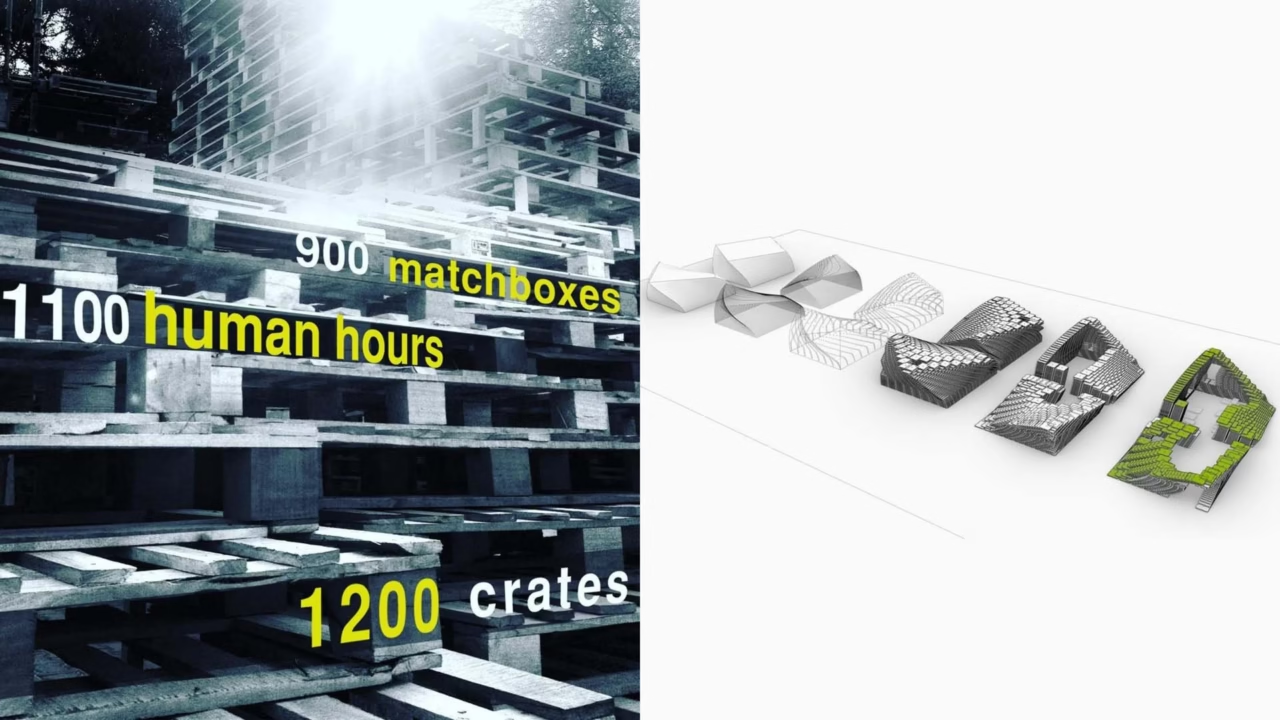
MOFA Studio follows a site-first, systems-led approach where projects are treated as constraint sets resolved through clear structure and efficient detailing. Design begins with hand-drawn sketches that provoke the right questions and evolves through physical models, parametric simulations, and data-driven analysis. Climate, access, structure, material behaviour, and lifecycle performance are addressed together rather than in isolation.
With strong in-house research and construction detailing capabilities, the studio ensures ambitious ideas remain practical and buildable. Architecture, landscape, sustainability, and technology operate under one roof, enabling rapid iteration and informed decision-making, while integrated project management sustains global relevance and a distinct local identity.
ETHOS
Modern Indian architecture is often shaped by fixed systems that prioritise object-making or commercially driven efficiency, frequently disengaged from lived experience. MOFA Studio deliberately challenges this condition by questioning rigid frameworks that limit human potential and oversimplify everyday life.
The studio’s work is rooted in the conviction that architecture must remain fluid, adaptive, and deeply human. Each project begins with a clear vision, developed through inclusive processes that engage stakeholders and value-based execution. Buildings are treated as open systems that continuously negotiate with social behaviour, ecological context, and operational realities.
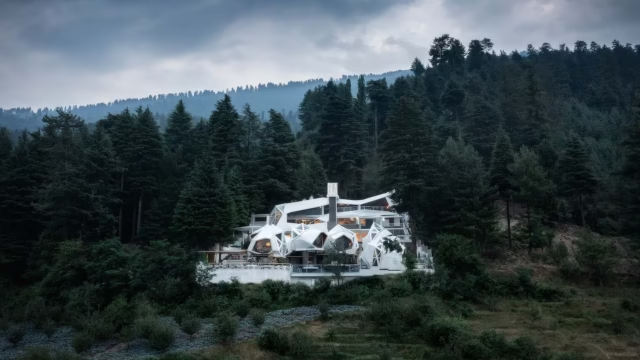
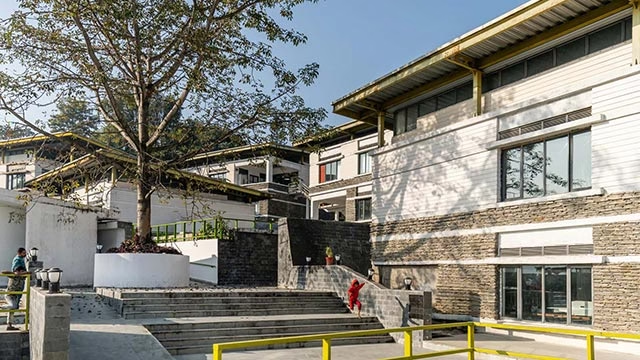
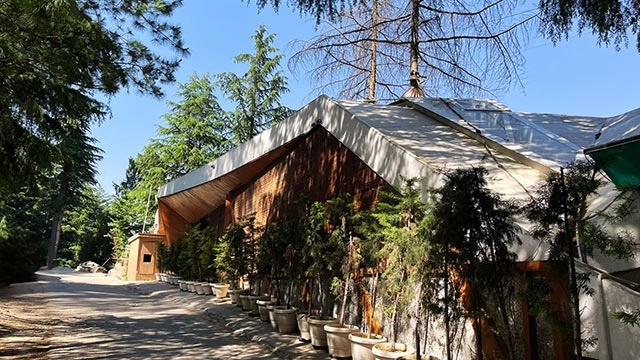
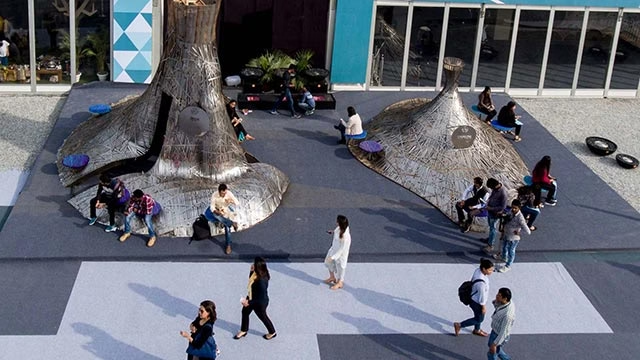
Projects are shaped to enable cohabitation with nature, flatten hierarchies through shared spaces, and create environments where interaction, empathy, and community can emerge organically. Landscapes, circulation, and thresholds are designed as active spatial systems that transform movement into meaningful experience. Every project draws meaning from its site, history, and inhabitants, allowing architecture to adapt over time and carry its embedded narratives forward as a lived, interpretable experience.
INNOVATION
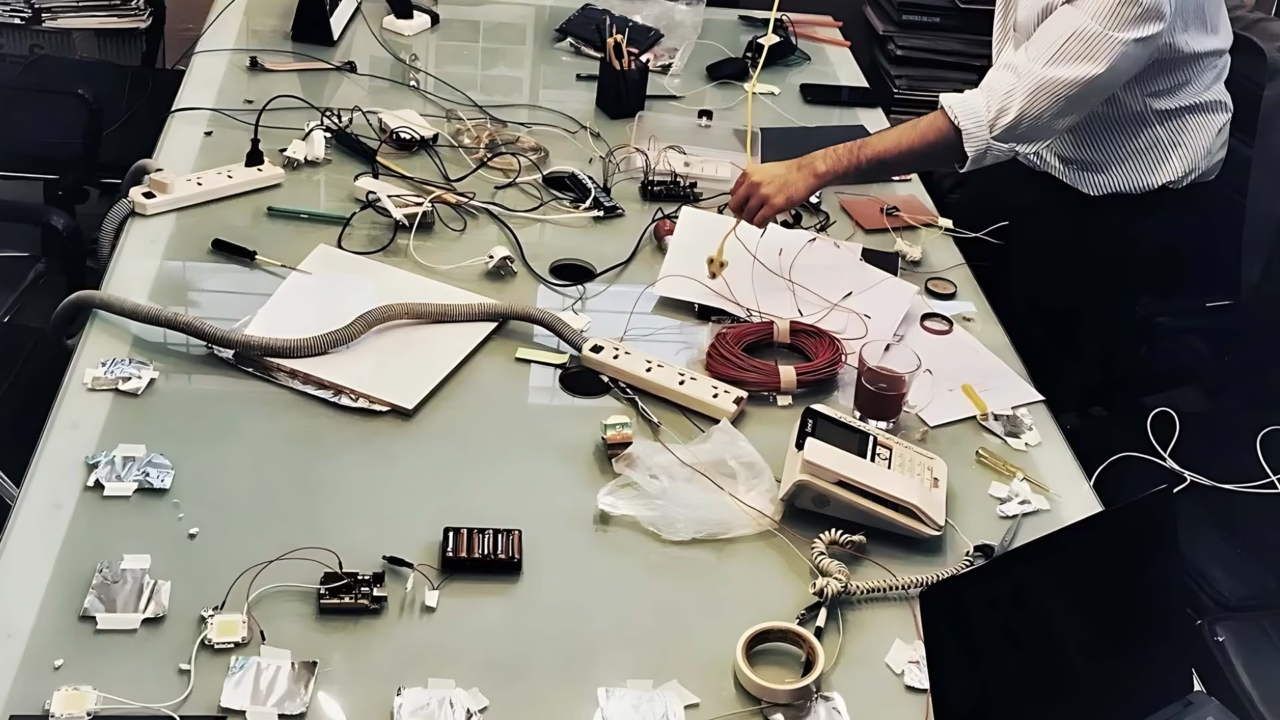
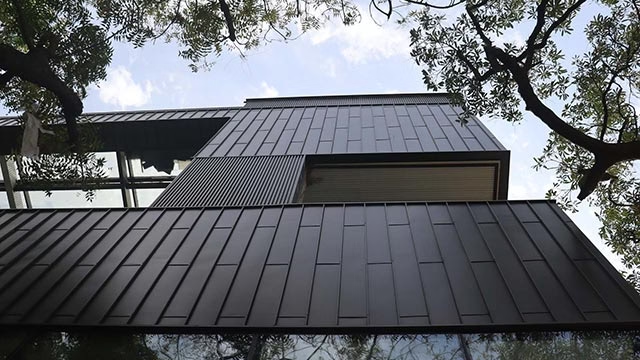
Innovation at MOFA Studio is driven by a dedicated in-house research cell and a hands-on construction-detailing wing. From early concept studies to final execution, the studio harnesses parametric workflows, digital simulation, and AI-assisted processes to test ideas rapidly and rigorously.
Technology is used as a creative collaborator to expand design possibilities while keeping human judgment and intuition at the centre of decision-making. Data-driven environmental analysis informs decisions at every scale, from masterplan massing that optimises solar exposure and wind performance to material selection that enhances thermal and acoustic comfort.
Emerging technologies are continuously prototyped and evaluated to ensure ambitious designs remain practical and buildable. This integrated approach closes the gap between visionary concepts and on-site execution, to balance spatial and social performance with economic viability.
STRUCTURES
MOFA Studio follows a data-driven architectural practice rooted in contextual intelligence and innovation, operating from New Delhi and responding to India’s environmental and urban realities. Engineering is approached as part of an open system where architecture, landscape, and sustainability function together rather than as separate disciplines. Design decisions address seismic resilience, wind loads, monsoon dynamics, local building techniques, and sustainability frameworks such as IGBC and GRIHA, all of which are interconnected and shape the project.
Drawing from extensive knowledge of Indian building codes, vernacular materials, and contemporary construction methodologies, the studio treats structure and engineering as enablers of fluid architecture. A systems-led, collaborative process allows rapid iteration and precise structural analysis, ensuring that architectural intent remains adaptive while closing the gap between vision and buildable reality.
BOLD STRUCTURE
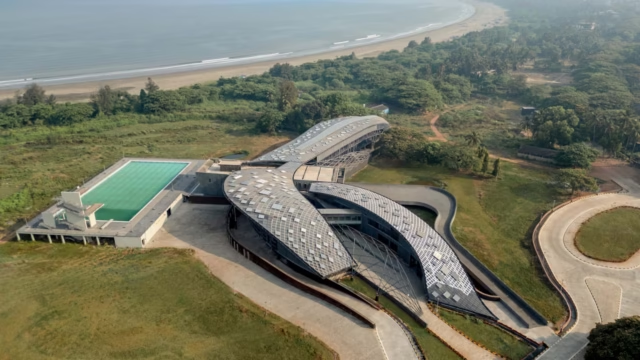
At MOFA, structures are not just about stability but are conceived as integral to design. Each system is chosen for its ability to endure diverse terrains and climates while remaining seamless with form. Our approach blends engineering with soul, ensuring longevity, sustainability, and fluid integration. Structure here is not background support but a living spine of the architecture.
SUSTAINABILITY (RESPONSIBLE ARCHITECTURE)
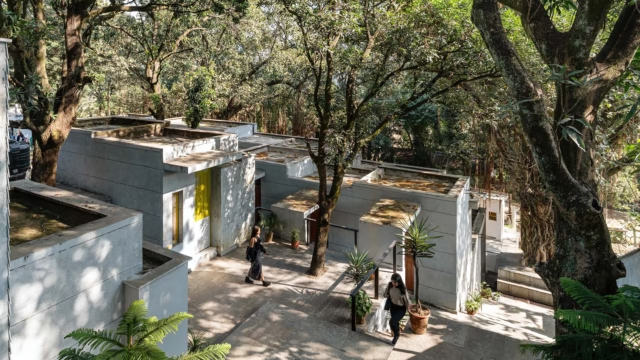
For us, sustainability is not a checklist but responsibility—minimizing intervention, preserving ecosystems, and using low-carbon or local materials. Passive strategies reduce dependence on mechanical systems, while water cycles and renewable energy close resource loops. Social impact is woven in by working with craftspeople, rooting design in heritage. Longevity and context guide every decision.
TECHNICAL SIMULATIONS
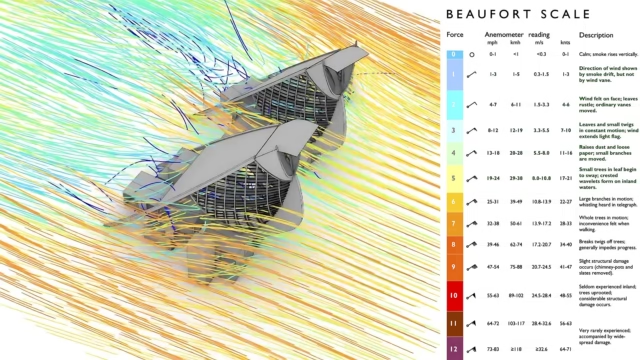
Simulations guide our design dialogue—merging climate data and human behavior into responsive form. Tools like sun-path, wind-flow, and thermal mapping refine building orientation and comfort, while circulation and flow studies shape intuitive spatial layouts. Each test, from daylight to ventilation, ensures performance is aligned with experience, making architecture breathe with its context.
BOLD STRUCTURE
At MOFA, structures are not just about stability but are conceived as integral to design. Each system is chosen for its ability to endure diverse terrains and climates while remaining seamless with form. Our approach blends engineering with soul, ensuring longevity, sustainability, and fluid integration. Structure here is not background support but a living spine of the architecture.
SUSTAINABILITY (RESPONSIBLE ARCHITECTURE)
For us, sustainability is not a checklist but responsibility—minimizing intervention, preserving ecosystems, and using low-carbon or local materials. Passive strategies reduce dependence on mechanical systems, while water cycles and renewable energy close resource loops. Social impact is woven in by working with craftspeople, rooting design in heritage. Longevity and context guide every decision.
TECHNICAL SIMULATIONS
Simulations guide our design dialogue—merging climate data and human behavior into responsive form. Tools like sun-path, wind-flow, and thermal mapping refine building orientation and comfort, while circulation and flow studies shape intuitive spatial layouts. Each test, from daylight to ventilation, ensures performance is aligned with experience, making architecture breathe with its context.
OPTIMISATION
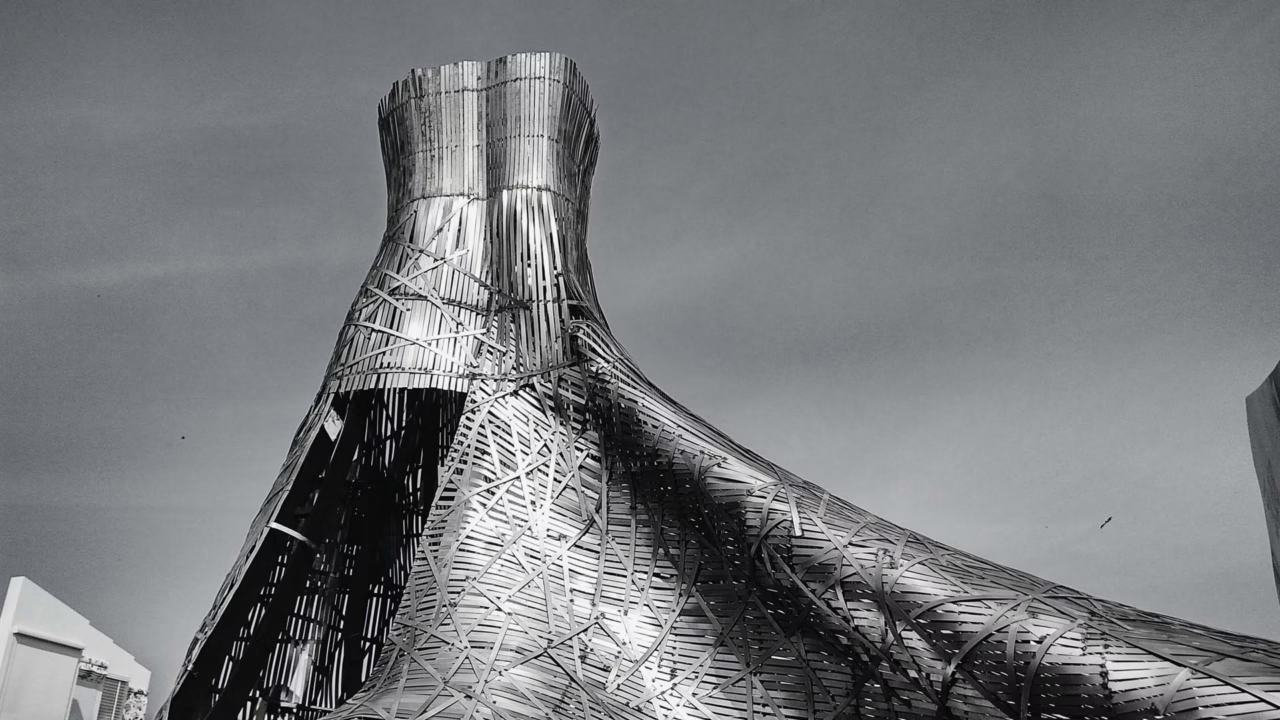
As projects scale up, so does complexity, accountability, and the number of stakeholders involved. MOFA Studio has delivered work across scales—from large institutional campuses and sports infrastructure to private residences of 1,100 sqm—developing a clear understanding of how resources must be managed as systems rather than line items. Over seventeen years, the studio has refined a systematic design and delivery framework where optimisation extends beyond cost savings to include time, performance, and long-term value.
This framework operates across the entire project lifecycle, engaging clients, consultants, contractors, and facility managers through coordinated decision-making. Spatial and social performance are balanced with economic viability through targeted value engineering that reduces both initial construction costs and long-term operational expenditure. Clear documentation, regular design-to-budget reviews, and strategic procurement ensure control during execution, while post-completion planning enables seamless aftercare. Through this integrated approach, MOFA Studio delivers architecture with enduring efficiency and measurable value for our clients.
WORK
MOFA Studio approaches every project- across urbanism, institutional campuses, sports infrastructure, hospitality, housing, and residential work; as a contextual response shaped by use, scale, and setting. While typologies vary, the studio’s intent remains consistent: to design environments that align spatial experience with social behaviour and environmental context. Each project is developed with close attention to how spaces are occupied, shared, and remembered, allowing architecture to carry meaning beyond form and function.