Please enable javascript on your browser or try a different browser or device.
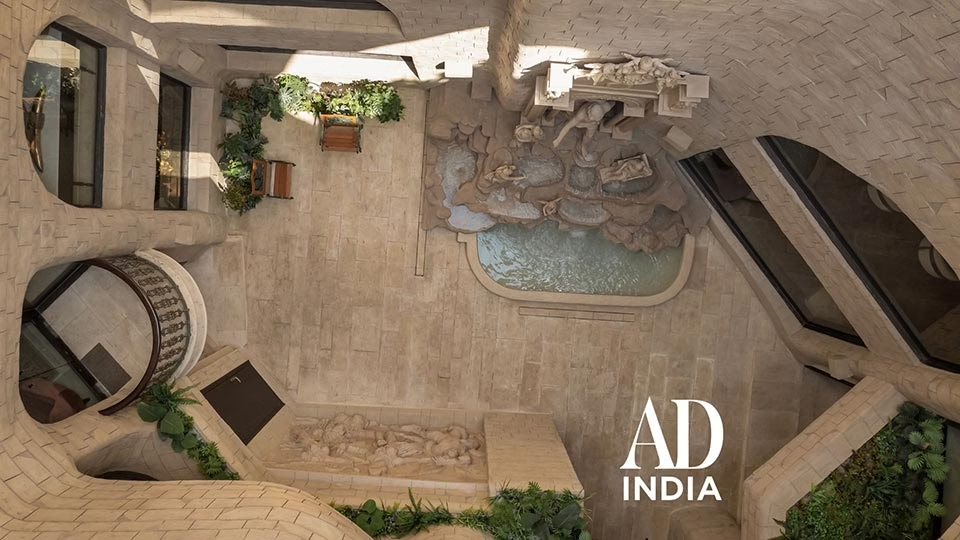
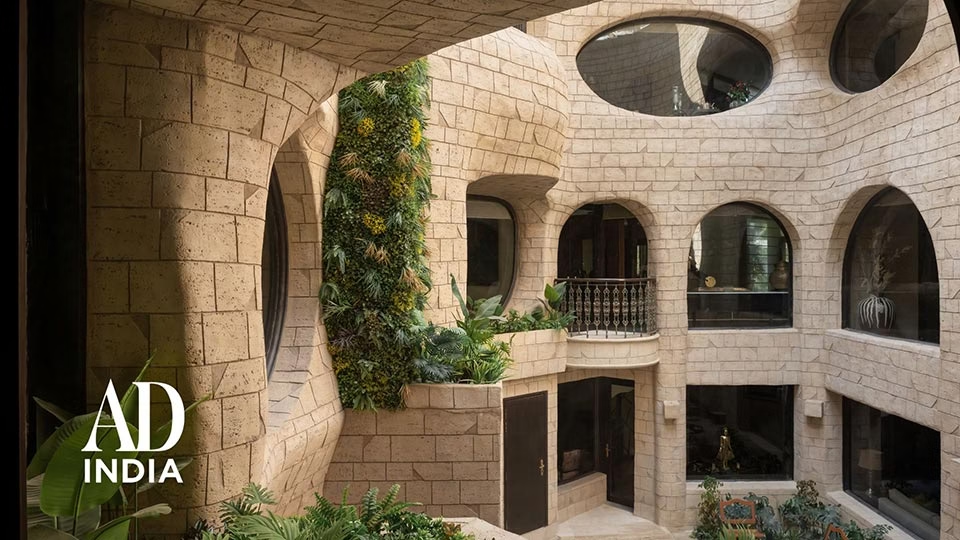
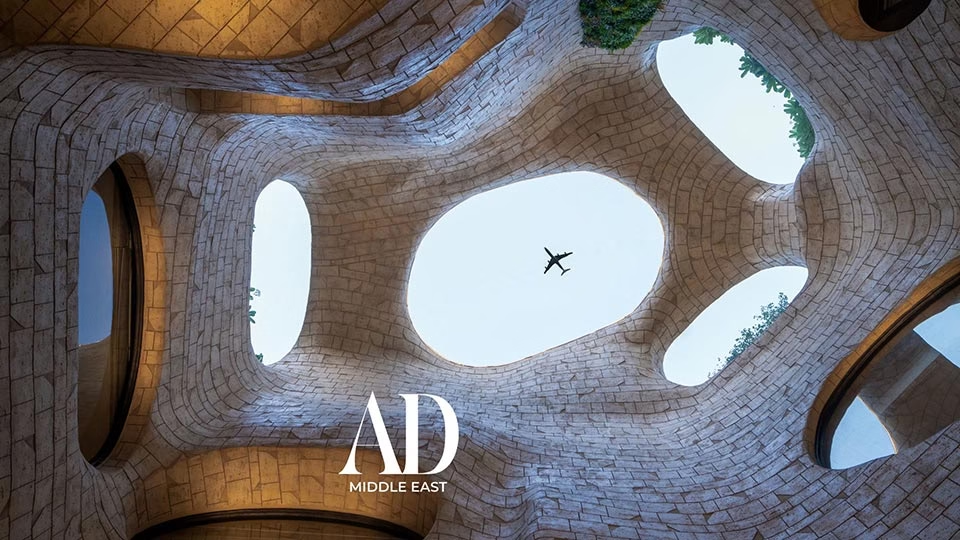
In this New Delhi home by Manish Gulati of M:OFA, the courtyard becomes the sculptural heart of the house. Inspired by Antoni Gaudí and shaped through AI‑aided design, it rises three storeys high in a fluid, engineered stone form that twists through the core of the home.
Light filters through apertures in the surrealist space, creating a play of shape and shade that unfolds throughout the day like a piece of theatre.
“Supercharged by AI design softwares and precise digital modelling, this cave-like space is at the heart of a surrealist courtyard home in New Delhi, India.”
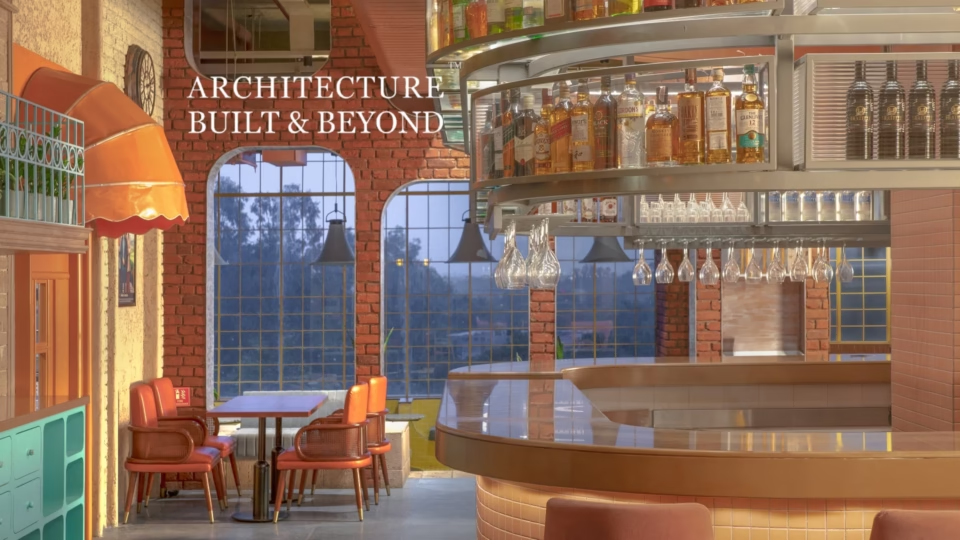
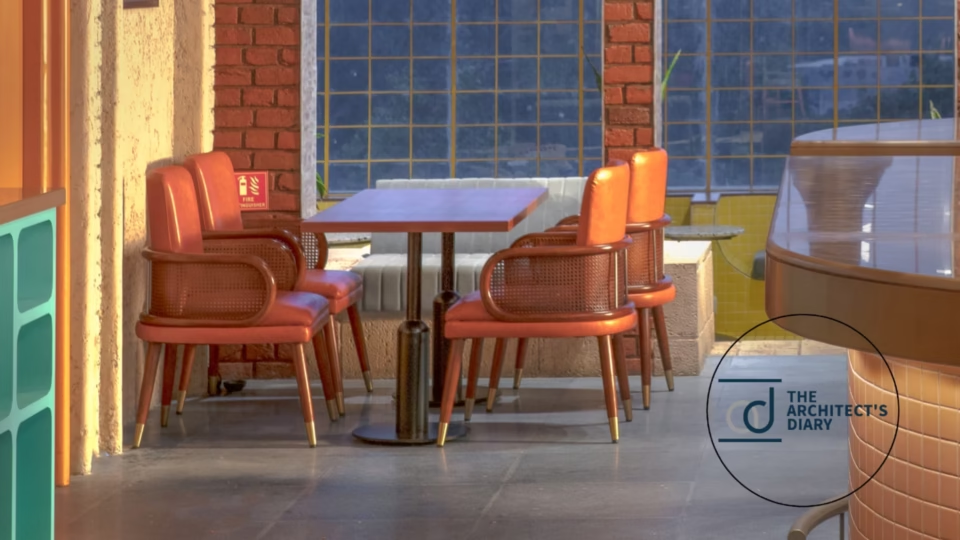
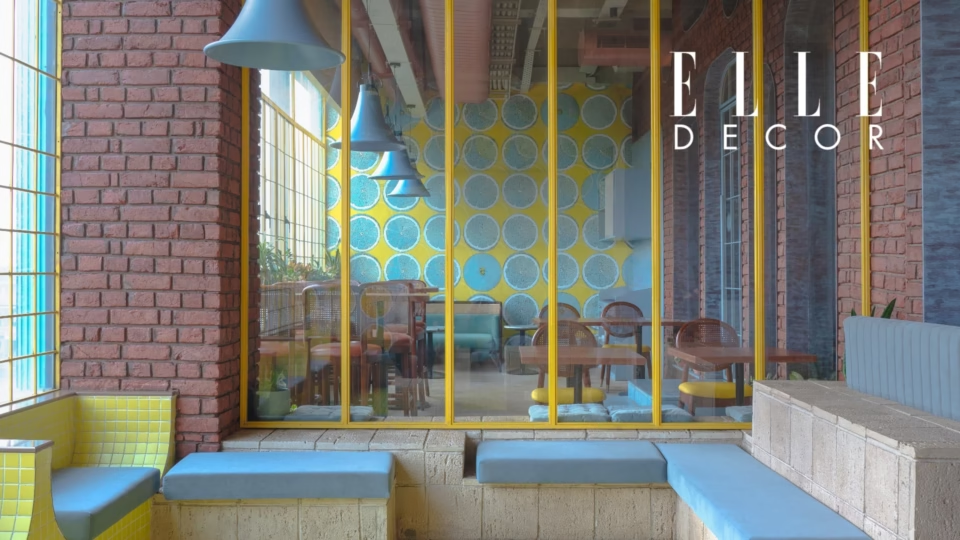
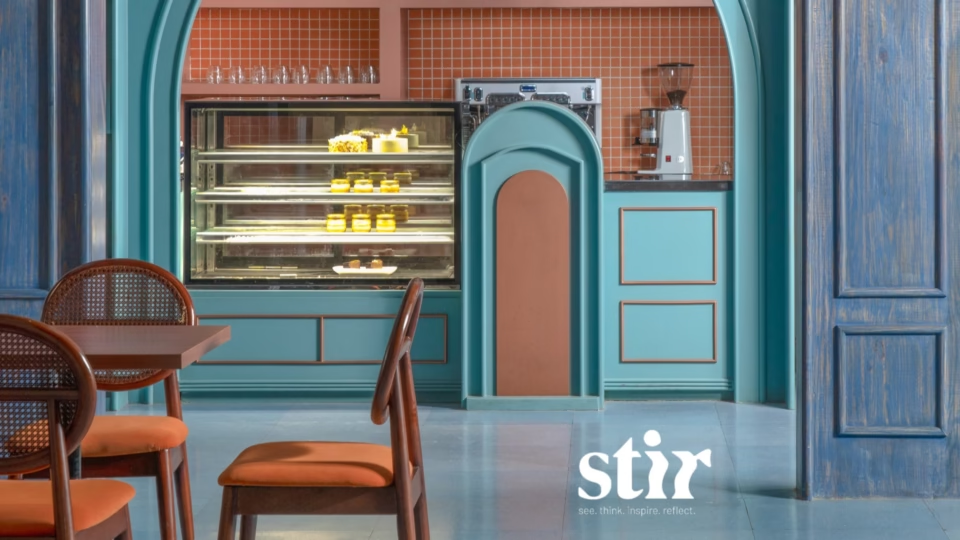
The design draws inspiration from Wes Anderson’s distinctive, colorful style, blending contextual elements from Delhi and Faridabad’s medieval architecture with film-inspired color palettes to create a uniquely curated spatial experience.
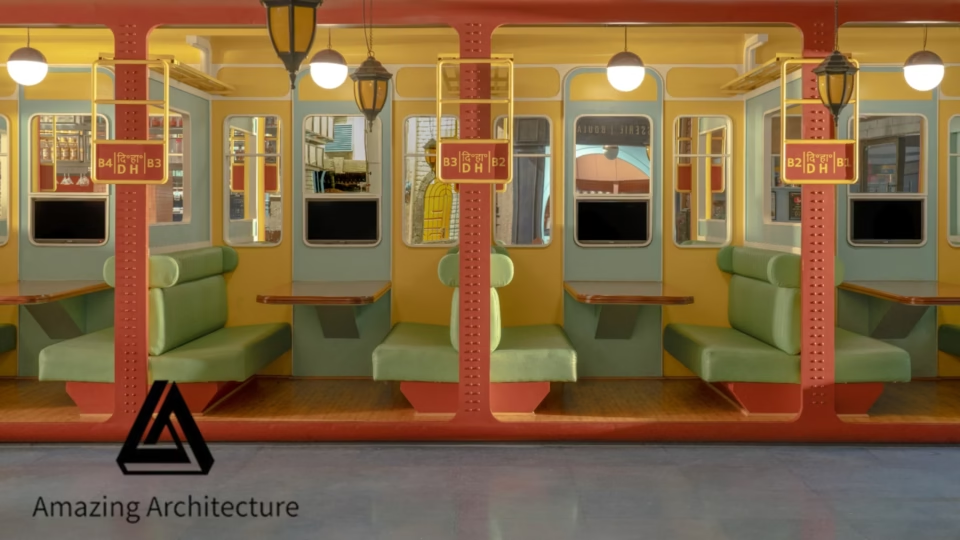
Café Delhi Heights in Faridabad blends Wes Anderson’s vibrant cinematic style with Delhi-Faridabad’s heritage, creating a whimsical, multigenerational café that encourages connection, storytelling, and shareable experiences through its immersive, stage-like design.
“Cafe Delhi Heights is an ode to cinematic wonders, where every corner depicts visual stories, designed to be experienced. The interplay of colors, textures, and symmetry echoes a director’s vision, offering a setting of nostalgia and modernity. It’s a delightful fusion of architecture and cinema, from Wes Anderson’s charm to old Delhi’s vibrant bazaars.” ~ Anusha Sridhar (TAD Editor)
This cafe near New Delhi is a fantastical Wes Anderson setting designed entirely with AI
Designed as a social experiment, Café Delhi Heights offers cinematic, larger-than-life settings with picture-perfect backdrops, turning every guest into a character within its playful, satirical, and influencer-friendly environment.
Wes Anderson’s films, the streetscapes of Old Delhi, Surajkund’s stepped reservoir and the iconic Indian Railway wagon inform the pastel-hued interiors of the cafe in Faridabad, India.
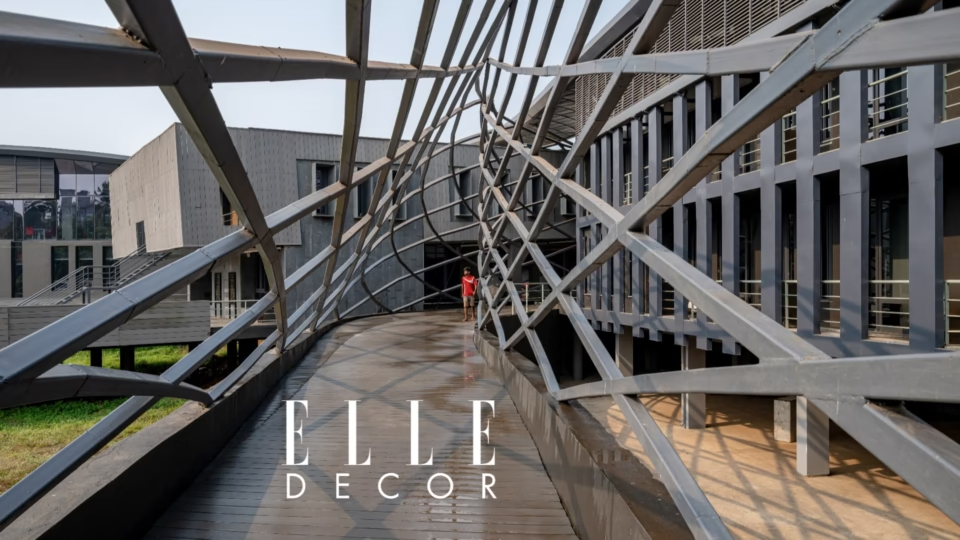
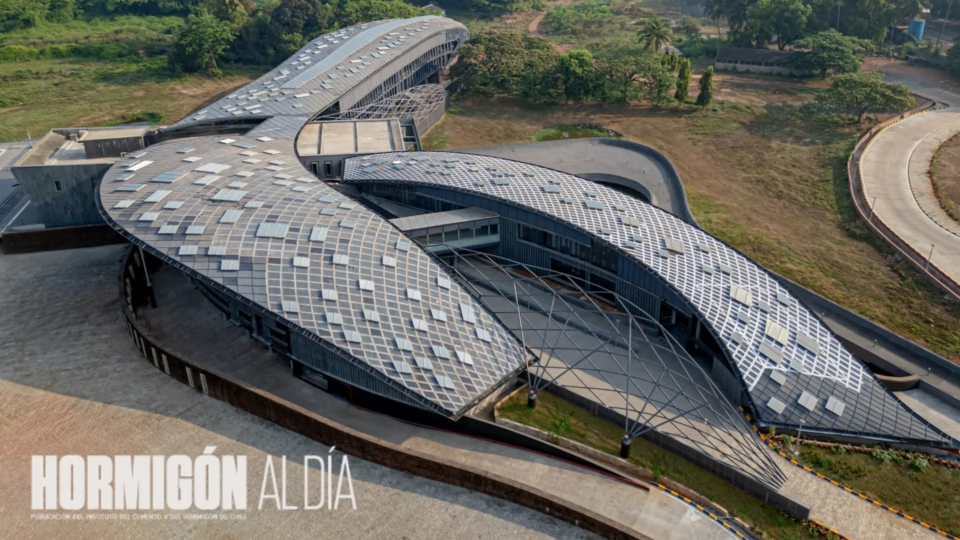
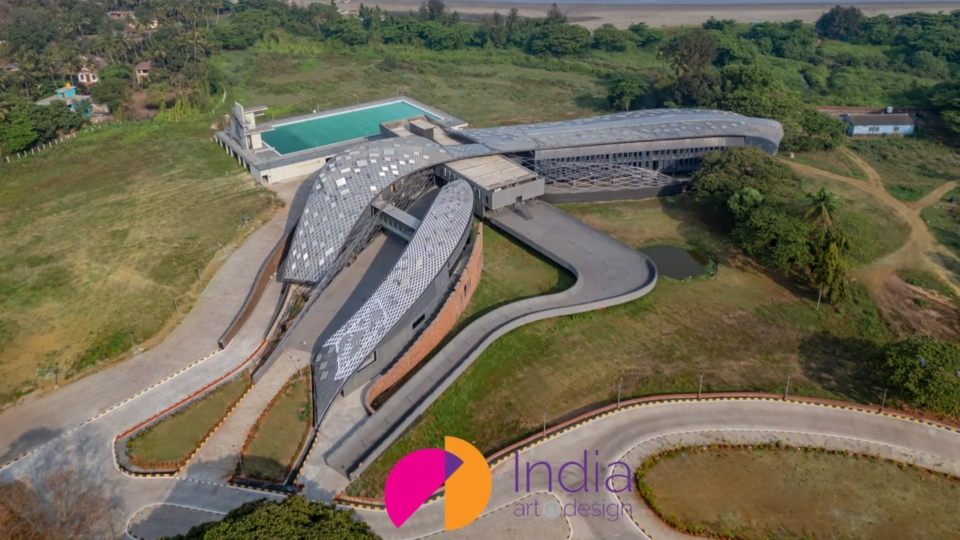
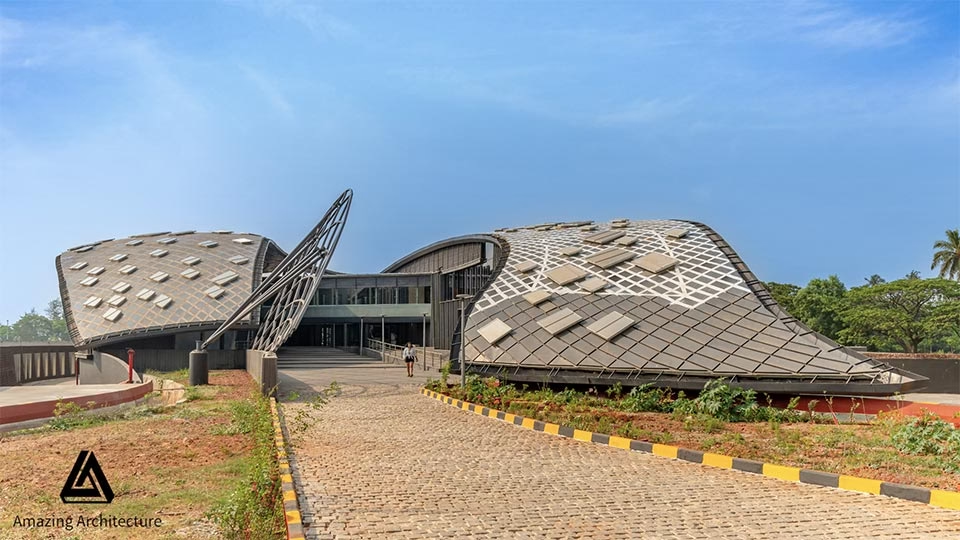
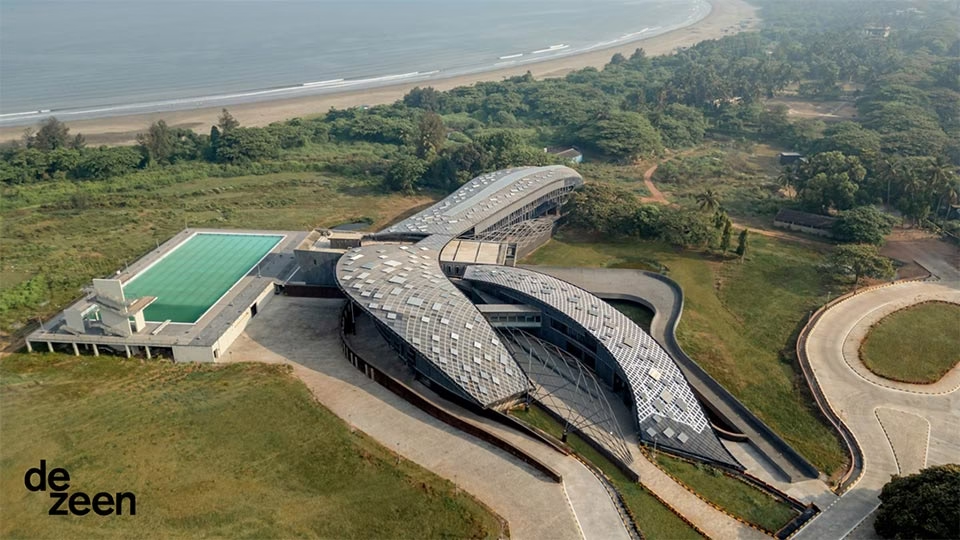
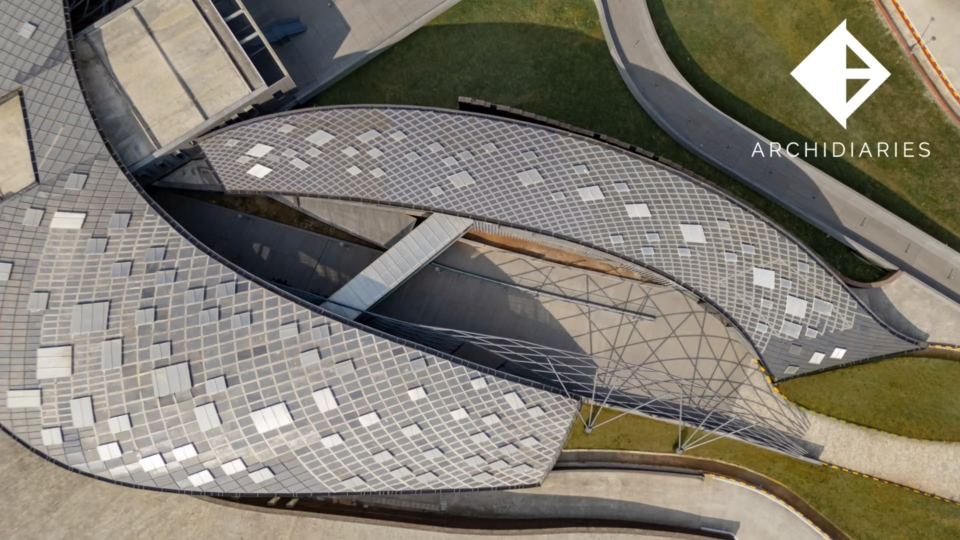
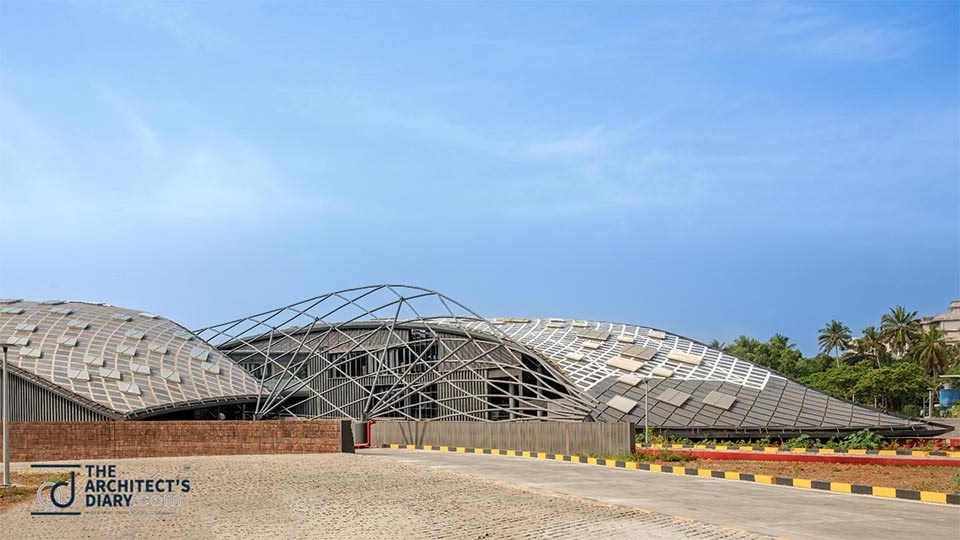
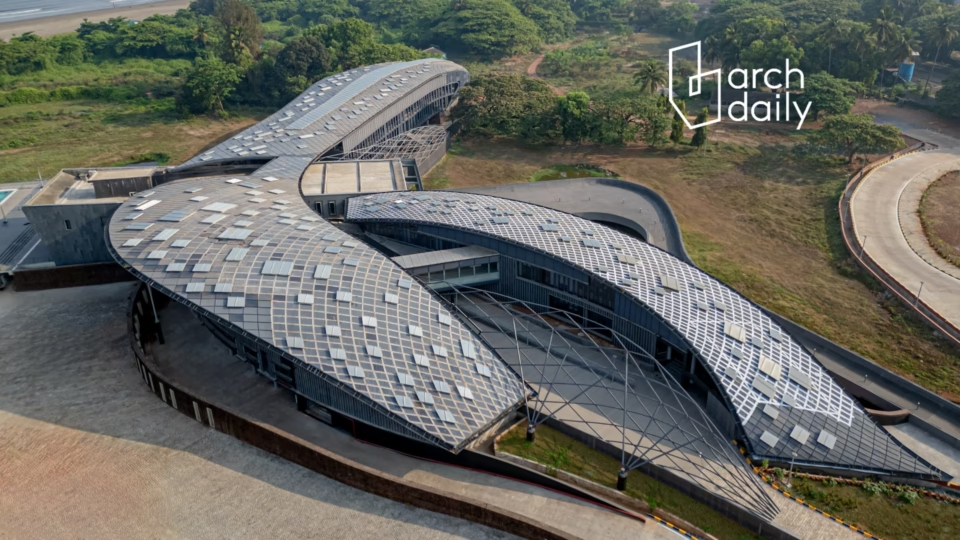
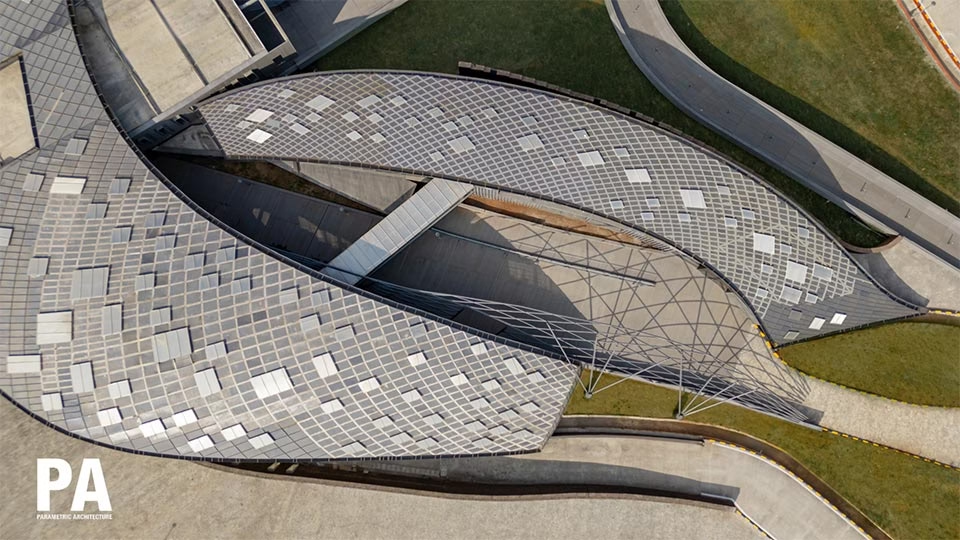
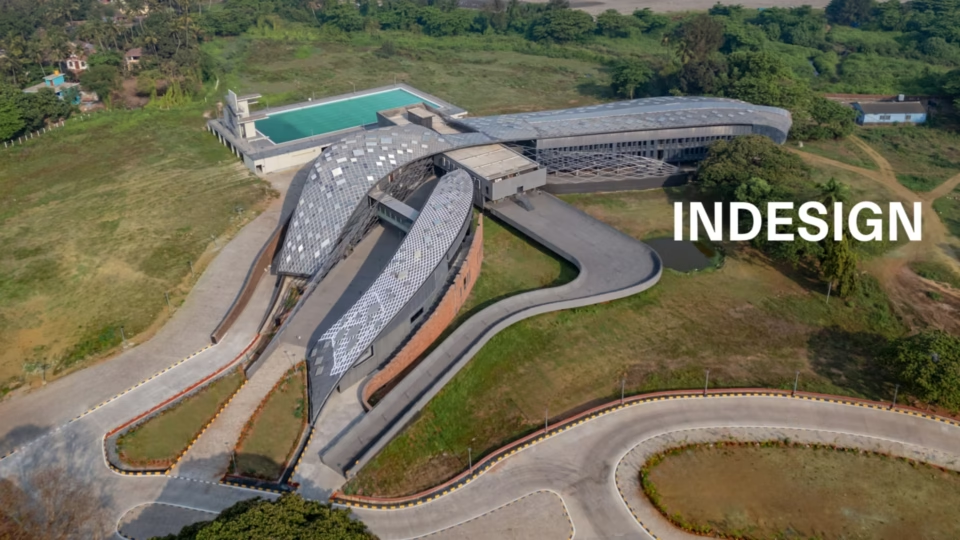
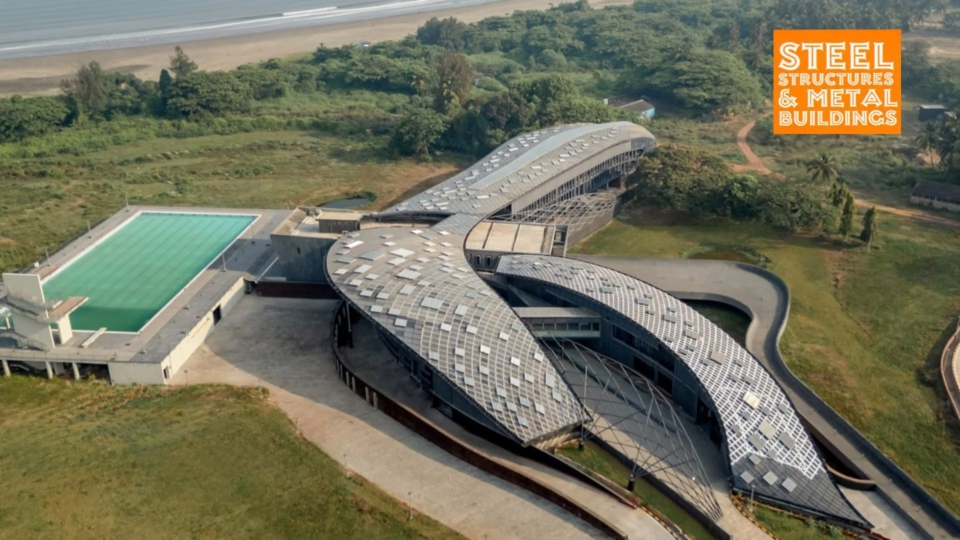
The National Institute of Water Sports (NIWS) in Panjim, Goa—spanning 1,30,006 sq ft—is among Southeast Asia’s largest water sports institutes. Inspired by the deep sea, architect Manish Gulati of MOFA Studio envisions it as a mythical creature rising from the Arabian Sea, connecting the structure’s dynamic form to both its marine and Goan contexts.
“A clear design approach with a bold idea utilizing every local resource available with a systematic approach to its construction. We were looking for an expression that would integrate the cultural and economic importance of water sports into the educational fabric, ensuring that training and development for every local lifeguard to a tour operator in this field, is state of the art and globally competitive.“
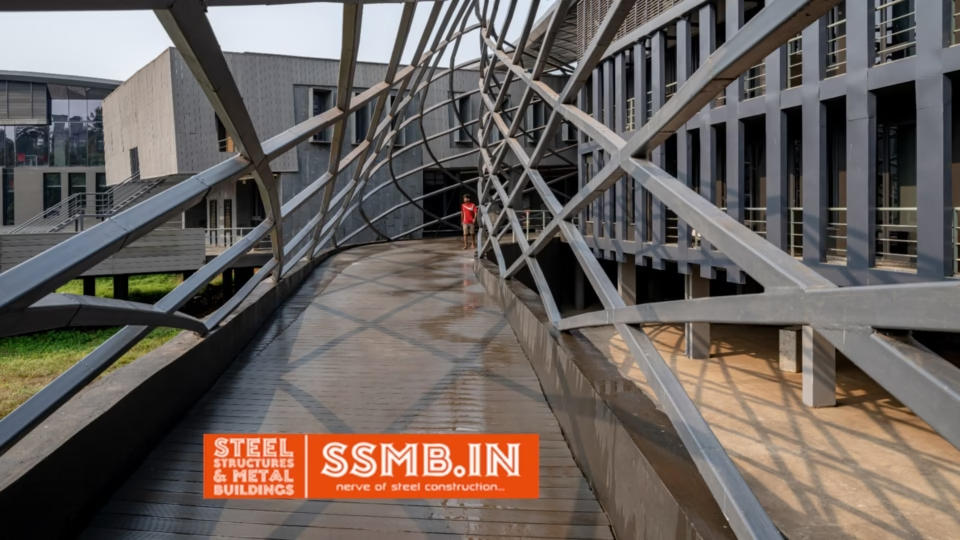
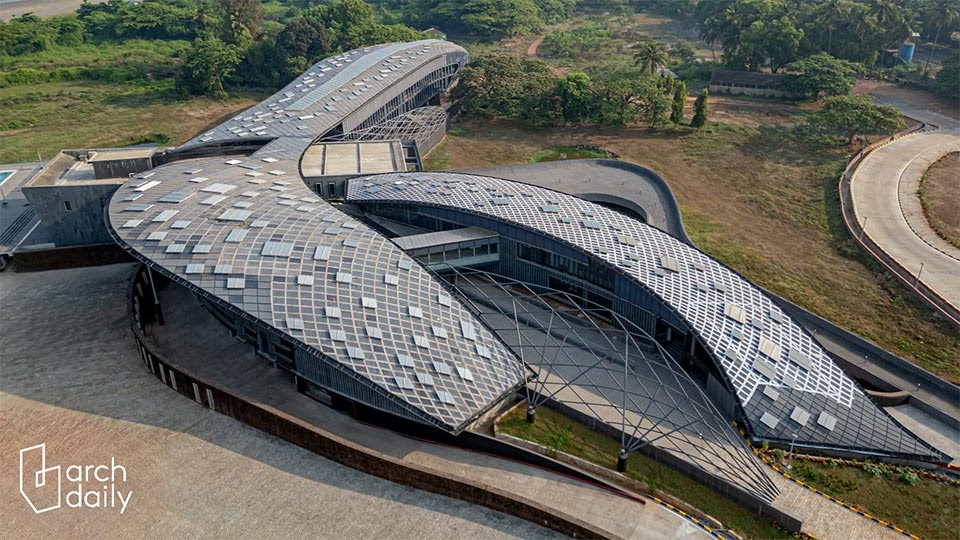
The National Institute of Water Sports (NIWS) in Goa by M:OFA Studios is Southeast Asia’s largest water sports institute, spanning 90,000 sq ft. Inspired by ocean waves, its parametric, CNC-cut grid-shell roof uses 15,000 steel pipes for precision and efficiency. With sustainable strategies, rainwater harvesting, and inclusive design, NIWS merges technology, functionality, and Goan vernacular to create an iconic, cost-effective landmark.
Ubicado en Goa, el Instituto Nacional de Deportes Acuáticos (NIWS) diseñado por M:OFA Studio se inspira en la dinámica del océano, con un techo de estructura liviana que emula el movimiento fluido del agua. Este hito arquitectónico integra elementos paramétricos y de fabricación digital, creando espacios interconectados y fluidos. Con funciones educativas y recreativas, el diseño captura la energía del mar, destacándose como el primer instituto público de deportes acuáticos en el sur de Asia.
The National Institute of Watersports (NIWS) in Goa, designed by M:OFA Studios with DELF Consulting Engineers and Jade Consultants, is Southeast Asia’s premier water sports institute. Spanning 90,000 sq ft, it features seismic-resistant structures, a 4,000 sq ft double-curved steel gridshell roof of 15,000 pipes, corten steel facades, and parametric design. The complex integrates advanced fabrication, sustainable engineering, and functional zoning, offering world-class water sports training and academic programs.
The National Institute of Water Sports (NIWS) in Goa, designed by M:OFA Studios, blends intuitive and parametric design with local culture. As Southeast Asia’s largest water sports institute, it creates a bold landmark in Goa’s public architecture. The design integrates cultural and economic aspects of water sports into education, offering advanced training for lifeguards and tour operators, using local materials and a distinctive floating roof for a sustainable, iconic identity.
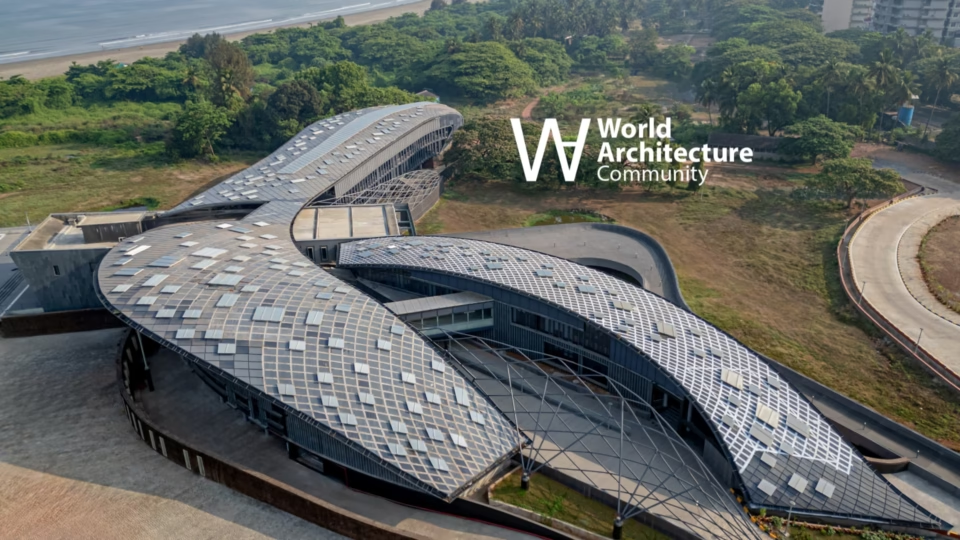
The National Institute of Water Sports (NIWS) in Goa, designed by MOFA Studio, is Southeast Asia’s largest water sports institute. Inspired by ocean waves, its architecture blends local ethos with global design, featuring a 4000 sqm gridshell roof built with 15,000 pipes and 5,000 CNC-cut panels. Conceived through an international competition, NIWS symbolizes Goa’s maritime culture, advancing marine tourism and training while showcasing innovation in cost-efficient digital fabrication.
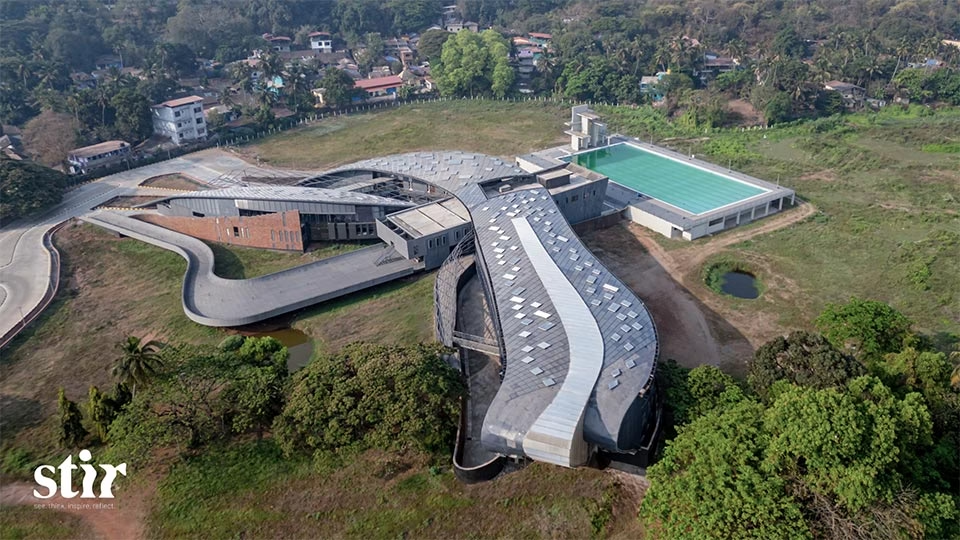
The National Institute of Water Sports (NIWS) in Goa, designed by MOFA Studio, is Southeast Asia’s largest water sports institute. Inspired by ocean waves, its fluid form merges local ethos with global design through a 4000 sqm gridshell roof made of 15,000 pipes and 5,000 panels. The campus integrates institutional, residential, administrative, and recreational zones, encouraging interaction while advancing marine tourism and training.
Designed by M:OFA Studio, Goa’s National Institute of Water Sports features a wave-like, sustainable form symbolizing the sea’s dynamism, blending local materials, climatic responsiveness, and global identity into an iconic landmark.
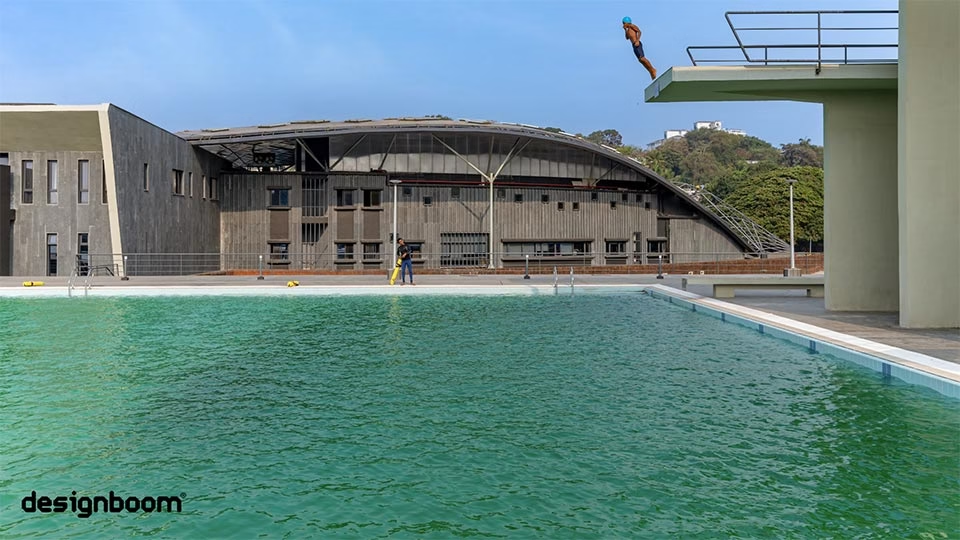
MOFA Studios designed the National Institute of Water Sports in Panaji, Goa, inspired by the sea’s dynamic nature. The 15,000-square-metre centre features three curved, interconnected steel gridshell volumes clad in scaly panels, symbolising waves. It houses accommodation, an Olympic pool, teaching areas, and an auditorium, with fluid spaces encouraging informal interactions. Large windows offer sea views, while bridges, plazas, and a rainwater pond integrate the centre with its coastal surroundings.
The water sports complex in Goa by M:OFA Studios captures the dynamic essence of the sea through its wave-inspired form. The design mimics the surge and rhythm of an ocean wave, symbolizing movement, energy, and fluidity. Its curving architecture not only reflects the natural force of water but also creates an immersive environment that enhances the spirit of aquatic adventure.
National Institute of Water Sports by MOFA Studio creates a bold iconic statement that transcends functional pragmatism in institutional architecture. The design seeks to integrate water sports’ cultural and economic significance into education, ensuring state-of-the-art training and development for local lifeguards and tour operators. They aimed to balance local ethos with a global approach, using local materials at the ground level and a poetic floating roof to create a balanced educational experience.
The National Institute of Water Sports (NIWS) in Goa, designed by M:OFA Studio, is Southeast Asia’s largest water sports institute. Conceived through an international competition, it blends local ethos with global design, featuring a dynamic wave-inspired parametric roof built from over 15,000 pipes and 5,000 CNC-cut panels. The institute promotes marine tourism education, balancing tight budgets with advanced technology, creating a fluid, interactive campus that reflects the sea’s energy and Goa’s cultural identity.
The National Institute of Water Sports (NIWS) in Goa, designed by M:OFA Studio, is a dynamic architectural masterpiece inspired by the sea. The building’s wave-like form represents constant motion, with a lightweight, digitally fabricated roof of 15,000 pipes and 5,000 custom panels. The design blends local materials with global innovation, ensuring functionality, sustainability, and inspiration for adventurers, while overcoming budget constraints with cost-efficient techniques and a strong connection to Goa’s maritime culture.
果阿国家水上运动研究所(NIWS)的设计灵感来自海洋的动态特性,屋顶的波浪形态象征着海洋的流动与能量。建筑通过流动空间和光影变化创造不断运动的效果,模糊了建筑元素的界限。采用数字制造技术,超过15000根管道和5000块定制屋顶板拼接成梯形面板网格壳结构,既满足功能性又呈现出动态美感,成为印度最复杂的数字制造屋顶之一。
The National Institute of Water Sports in Panjim, Goa, designed by M:OFA Studio, reflects the Arabian Sea’s dynamic energy through a wave-inspired form created with over 5,000 custom panels. Fluid zoning blends formal and informal spaces, while shifting perspectives and light play evoke motion, making the building an immersive experience. Using digital fabrication, the design serves as both a landmark and a vibrant symbol of adventure and exploration for water sports enthusiasts.
Inspired by the sea, the National Institute of Water Sports (NIWS) in Panjim, Goa, has recently been completed by MOFA Studio.
O Governo de Goa lançou um concurso internacional para o Instituto Nacional de Esportes Aquáticos, buscando uma arquitetura além do pragmatismo funcional. O objetivo era duplo: criar uma declaração ousada e icônica e introduzir inovação no cenário arquitetônico de Goa — uma linguagem global, porém enraizada, que ressoe o vernáculo através de materiais locais.
The National Institute of Water Sports (NIWS) in Goa represents a bold architectural statement, moving beyond conventional pragmatism. The design embraces a dynamic, wave-inspired form, mimicking the sea’s fluid energy through parametric, CNC-cut roof panels. The structure integrates local materials and spaces that encourage informal interaction. The lightweight grid shell roof is a structural marvel, blending global innovation with Goan vernacular, while ensuring sustainability and functionality.
The National Institute of Water Sports (NIWS) in Goa, designed by M:OFA Studio, combines dynamic, wave-inspired architecture with local materials to create a functional and iconic building. The complex’s fluid spaces reflect the energy of the sea, integrating digital fabrication and parametric design. The lightweight, digitally fabricated roof spans 4000 sqm, symbolizing constant motion, while offering a sustainable, cost-effective solution. It serves as a hub for water sports education and adventure.
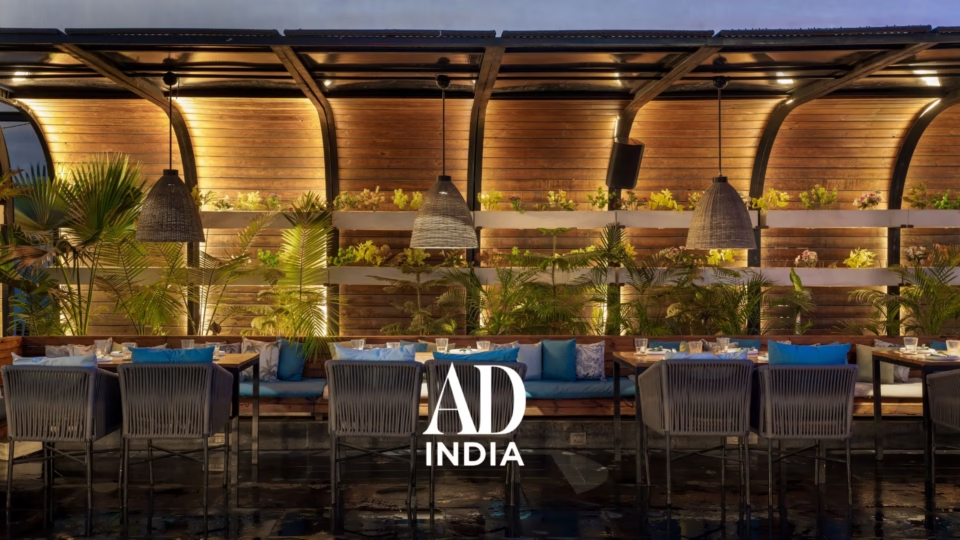
From visually arresting high-end restaurants to laidback gastrobars, take your pick from these novel dining venues in Delhi.
Delhi stands as India’s design capital, blending political prominence with a deep-rooted craft culture. Surrounded by rich artisanal traditions from Kashmir to Madhya Pradesh, the city nurtures a design ethos that values handloom and local craftsmanship. IFJ celebrates this vibrant creative community by highlighting Delhi’s architects, designers, and thinkers—visionaries shaping the city’s architectural and cultural future through innovation, tradition, and thoughtful urban growth.
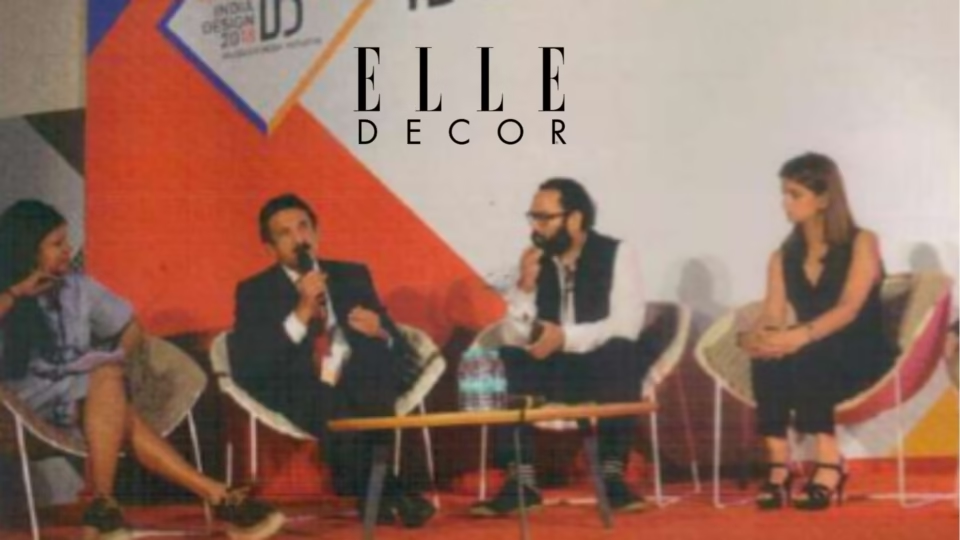
HP India, in collaboration with ELLE DECOR India, hosted an entrepreneurship and design conclave at JW Marriott, New Delhi Aerocity. The event featured industry leaders, including Manish Gulati, Founding Partner of M:OFA Studio, who spoke on the theme of “New India” alongside Asha Sairam, Madhav Raman, and Iram Sultan. The conclave concluded with the Indian premiere of the documentary Eames: The Architect and the Painter.
Ar. Manish Gulati and Ar. Tanushree Gulati of M:OFA Studios focus on bridging thought and reality in educational architecture. Advocating hybrid and bio-engineered materials, prefabrication, and modularity, they create flexible, eco-conscious spaces with daylight, ventilation, renewable energy, and learning landscapes, exemplified by NIFT Kangra, NIWS Goa, and ITM Gwalior.
The Room of Illusions is an immersive spatial experiment blending art, architecture, and perception. Designed to challenge sensory boundaries, it uses reflective materials, dynamic geometry, and strategic lighting to create shifting visual experiences. The installation invites visitors to question their spatial awareness, celebrating design as both a physical and psychological exploration.
Through Urbanscape, their experiential installation at India Design ID 2017, Gulati expressed this philosophy by creating fluid steel funicular structures as a tribute to Delhi’s lost trees — blending technology, nature, and ethics into one sustainable narrative.
The ID Symposium gathers global designers to discuss innovation, sustainability, and emerging trends. In its sixth edition, Ar. Manish Gulati of M:OFA Studios highlighted parametric design and the evolving interplay of technology, creativity, and human intuition in architecture, emphasizing adaptive thinking, collaboration, and expanding experiential possibilities.
Manish Gulati, principal architect of M:OFA Studio, New Delhi, leads a multidisciplinary practice designing interiors, products, exhibitions, and stadiums. In this issue, he explores parametric forms and geometric patterns in “Abstract Stripes” (Pg 58).
Located in Satbari, New Delhi, this 10,000 sq.ft home by Manish Gulati blends with the rugged Gwal Pahari terrain using local stone masonry and natural rock retaining walls. Floating, cloud-like roofs connect earth and sky, while seasonal water channels, solar systems, and rainwater harvesting ensure self-sufficiency. The design celebrates stone, light, and landscape, offering a poetic, site-sensitive response to nature’s raw beauty.
Tanushree Gulati, Principal Planner at M:OFA Studios and CEPT graduate, specializes in Urban Infrastructure Planning and Environmental Impact Assessment. She has led major public and private projects, consulted for Ernst & Young and Grant Thornton, and contributed to initiatives like the National Games and Bundelkhand Tourism Projects. Her work centers on sustainability and green building practices.
Tanushree Gulati, CEO and Urban Infrastructure Planner at M:OFA Studios, highlights that sustainability isn’t a trend but a legacy—deeply rooted in India’s climate-responsive traditions. She explains that true green design extends beyond technology, prioritizing climate, culture, and context to reduce resource consumption, lower operational costs, and improve long-term quality of life.
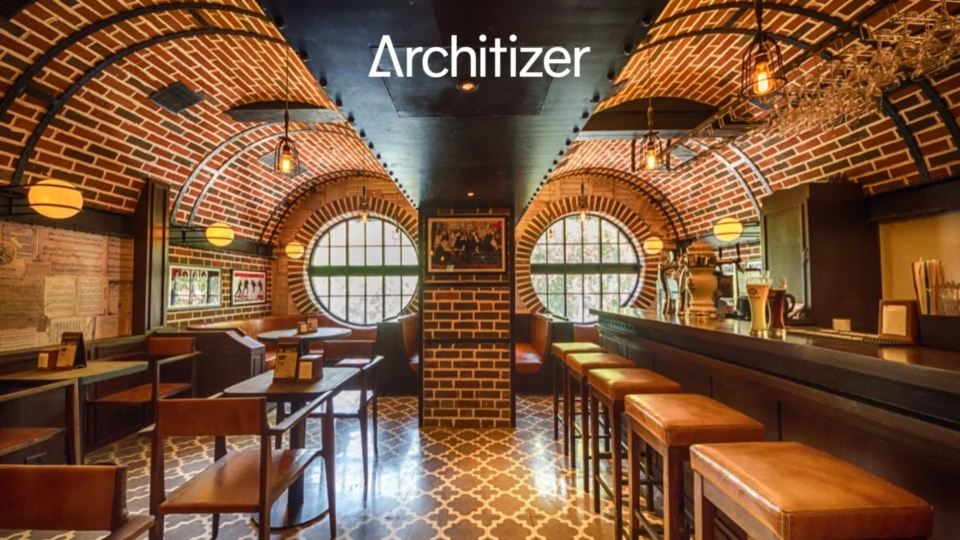
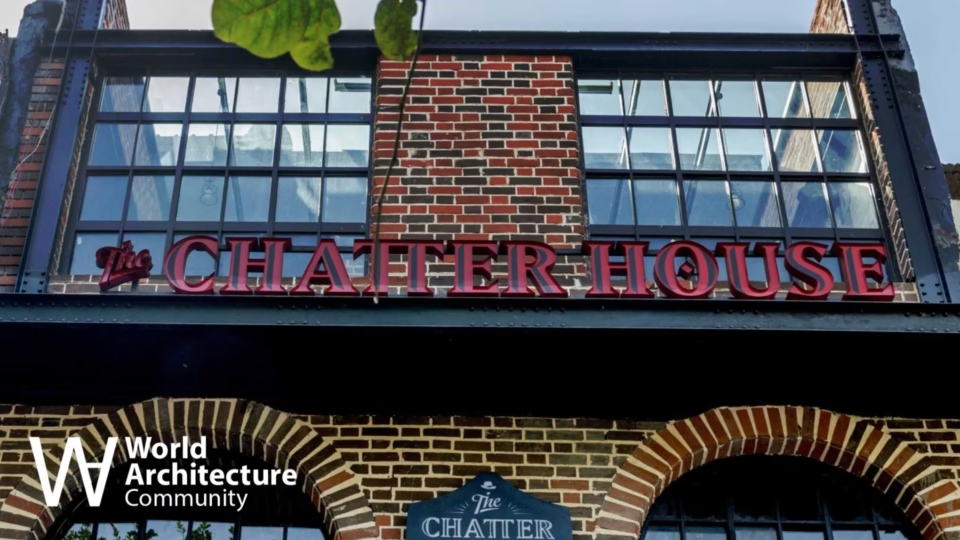
The Chatter House in Khan Market captures the vintage charm of English pubs, blending nostalgia with sophistication. Designed by Manish Gulati of MOFA Studios, the space stands out amid chic cafés and designer boutiques through its restrained elegance. Exposed brick walls, warm lighting, and classic furniture evoke a timeless ambiance—juxtaposing old-world aesthetics with contemporary dining culture to create a uniquely immersive experience.
Set along Agra Road between Sisodiya Rani Ke Bagh and Vidyadhar Bagh, Ghat Ki Ghani reflects harmony between nature, culture, and human resilience. As urbanization grows, such transitional spaces—where old and new intersect—become vital for social and ecological balance, enabling transformation through collective participation.
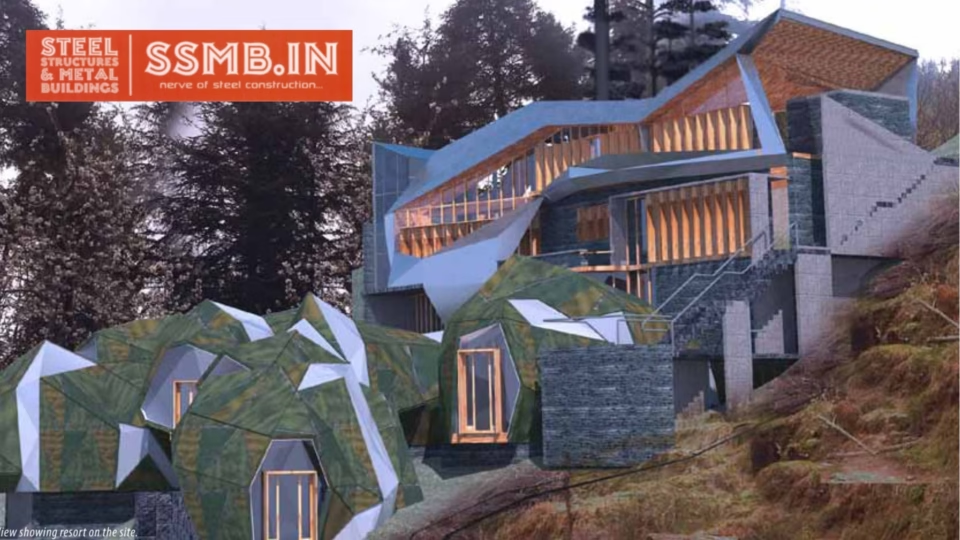
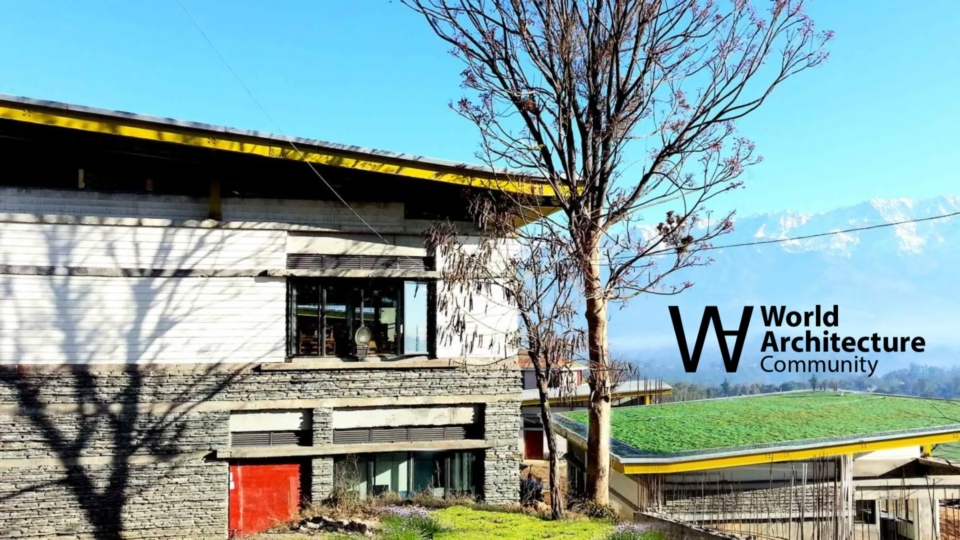
M:OFA Studios’ Aearth Resort in Naggar uses a triangulated grid-shell inspired by crumpled paper to create cave-like interstitial spaces. Built with local slate, pinewood, and ferrocement over tubular steel, it appears organically grown from the hills. Blending parametric precision with vernacular craft, the resort forms an art-driven, nature-immersed commune rooted deeply in its landscape.
Parametric design, as articulated by Manish Gulati of M:OFA Studios, fuses intuition with computation to transform ideas into form. Through simulations and sketches, M:OFA crafts fluid, nature-inspired architecture. In the Toni & Guy Salon, catenary curves and parametric models translated the motion of hair into spatial geometry, achieving harmony between human intuition, machine logic, and organic design evolution.
Manish Gulati of M:OFA Studios highlights steel’s adaptability through prefabricated modules assembled into trapezoidal cottage pods. Local artisans, trained through workshops, cast ferrocement over tubular steel frames, creating a lightweight, durable, and context-responsive hybrid construction system that blends innovation with craft.
At India Design ID 2017, M:OFA Studio, led by Ar. Manish Gulati, collaborated with Cutting Creations, rat[LAB] Interiors, and Living with Elan to create a massive urban installation highlighting the depletion of green spaces in cities. A giant banyan tree topped with a lattice-patterned cone symbolized a weaver bird’s nest — a metaphor for nature’s resilience and balance, urging viewers to rethink the harmony between design and environment.
Designed by Ar. Manish Gulati of M:OFA Studio, The Chatter House in Khan Market, New Delhi recreates the vintage charm of Irish pubs in a refined, contemporary setting. Spread across two floors, the 1,700 sq.ft. restaurant combines circular and skylit windows with warm interiors that balance formal dining and casual socializing. Gulati’s design evokes a sense of escape, camaraderie, and relaxed elegance—a perfect blend of sophistication and comfort.
After 15 years in practice, Manish Gulati critiques mainstream sustainability, urging India to prioritize contextual, climate-driven design over imported models and certifications. Drawing from Kerala houses and Rajasthani havelis, he advocates architecture that balances finance, human effort, and ecology—restoring environmental equilibrium through local materials, climate wisdom, and resource efficiency.
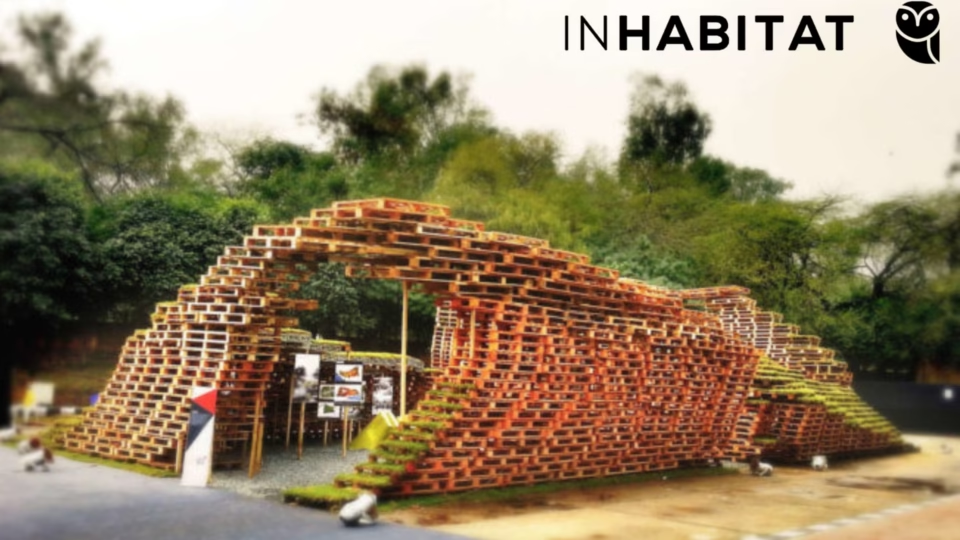
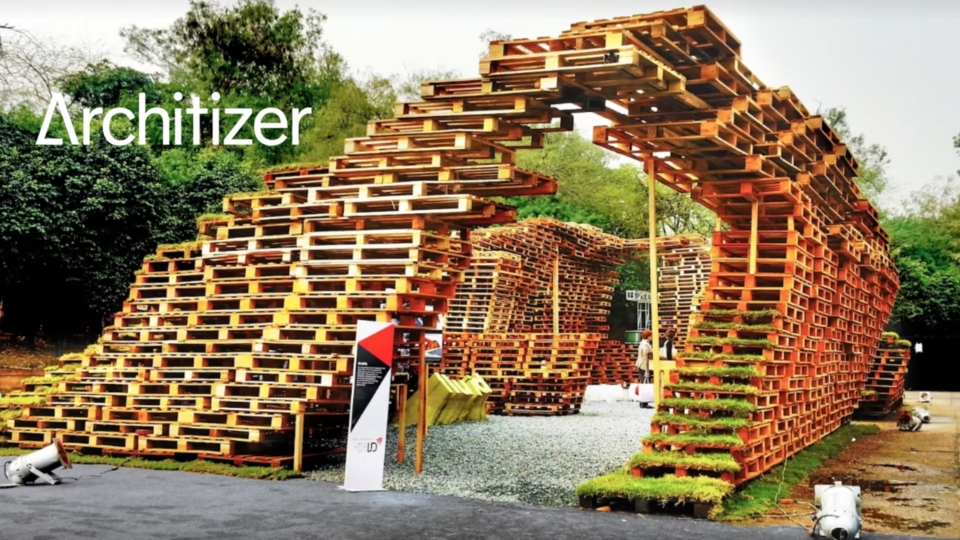
The Pensieve Pavilion by M:OFA Studios was an award-winning temporary installation for India Design ID 2014, built from 1,200+ recycled pallets. Inspired by Delhi’s ruins and childhood play, its undulating form integrated planted pockets and solar-powered interactive seating. Symbolizing “fluid thoughts,” it created a sustainable, playful urban landscape that blended art, memory, and ecology, encouraging visitors to reconnect with their surroundings.
M:OFA Studios’ Pensieve Pavilion in Delhi transformed discarded wooden pallets into a striking, ruin-like structure. Inspired by childhood memories of exploring the city’s ruins, the pavilion reimagined waste as a source of creativity. Though conceived as a temporary, sustainable installation, its success sparked community efforts to preserve it, showcasing design’s power to inspire and reframe urban waste.
Headed by Principal Architect Manish Gulati, M:OFA Studios has evolved from a boutique architectural firm into a multidisciplinary design institution. Based in New Delhi, the studio undertakes projects across India, combining innovation, creativity, and systematic efficiency. At M:OFA, architecture transcends passion—emerging as a collaboration of inventive minds dedicated to pushing design boundaries and redefining contemporary Indian architecture.
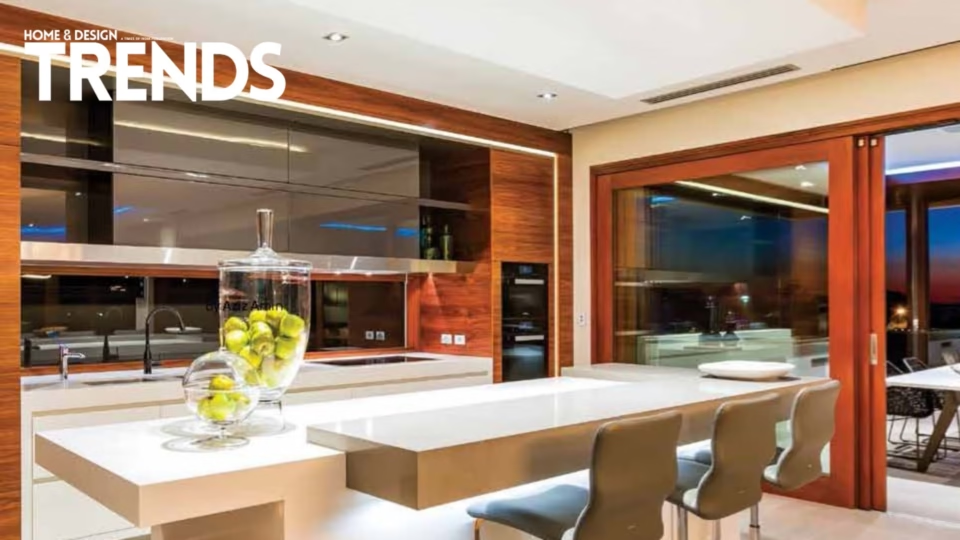
In this feature on the evolution of Indian kitchens, Ar. Manish Gulati (M:OFA Studios, New Delhi) highlights how cooking has transformed into a shared social experience rather than a gendered chore. Reflecting modern lifestyles, he notes that kitchens now merge with living areas to keep conversations flowing and families connected. This shift, influenced by changing work patterns and Western design ideas, has turned the kitchen into the home’s interactive heart.
“Space Innovation: The Evolution of Shared & Collaborative Spaces,” a Surfaces Reporter panel moderated by Dr. Anuradha Chatterjee, featured Manish Gulati, Ishvinder Kaur, and Vikas Sabharwal. The discussion examined India’s growing co-working culture, with Gulati noting that shared spaces are shaped more by financial planning than design. He emphasized creating efficient, flexible, multi-functional environments that adapt to changing economic and social demands.
Commissioned in 2010 through an international competition by the Ministry of Tourism and Government of Goa, the National Institute of Water Sports (NIWS) is envisioned as Asia’s first of its kind. Drawing inspiration from the dynamic relationship between the surfer and the sea, the design captures movement, rhythm, and energy. The architecture merges traditional laterite stone with contemporary corten steel, symbolizing harmony between nature, technology, and human spirit.
House B123 by M:OFA Studios reinterprets the joint family concept through an inward-looking design featuring light courts, split levels, and double volumes that foster interaction and privacy. A highlight is the exposed air-conditioning duct that doubles as a light fixture and art piece, symbolizing innovation within function. The raw material palette reflects the honesty and individuality of the residents, enhancing openness and togetherness throughout the home.
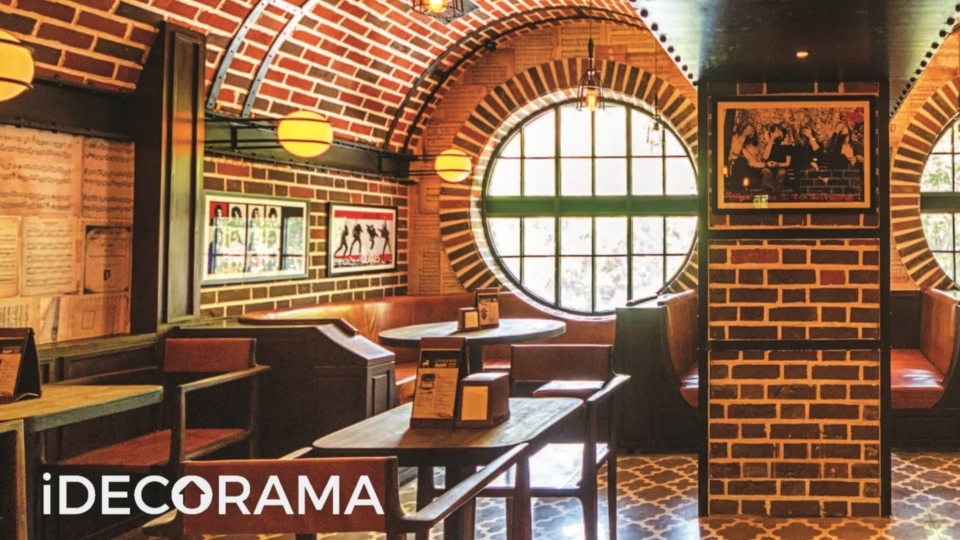
The Chatter House in Khan Market, designed as an ode to vintage Irish pubs, exudes understated elegance and nostalgia. Entered through a steel door into a dimly lit stairway, the bar reveals brick-lined barrel vaults, antique leather seating, and terrazzo flooring evoking old British underground stations. Inspired by locomotive-era aesthetics, Edison bulb lights and art deco elements harmonize with Irish memorabilia, creating a soulful, music-infused ambiance that balances warmth, restraint, and charm.
The Chatter House in Khan Market, New Delhi, designed by M:OFA Studios, recreates the warmth of vintage Irish pubs through materiality and ambience. Spread across 1,700 sq.ft. over two levels, it accommodates 75–80 diners. Featuring brick-lined barrel vaults, circular windows, and terrazzo flooring, the design blends Irish aesthetics with Indian sensibilities. Lime mortar brickwork and locally inspired elements ensure the pub feels authentic yet contextually rooted.
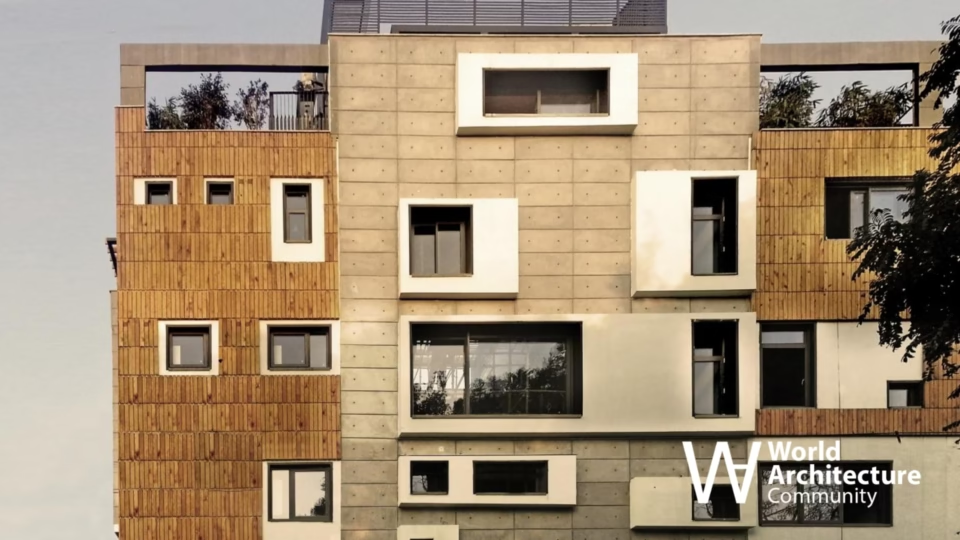
House B123 in New Delhi by M:OFA Studios reinterprets traditional Indian architecture in a modern way to suit a joint family’s interactive lifestyle. On a compact 300 sq. yard plot, the 11,500 sq. ft. residence rises vertically across five levels, with public and private spaces interlinked. A central atrium with a floating lounge, plunge pool, and feature wall connects all floors, encouraging openness and cross-views for family interaction.
The Chatter House in Khan Market by MOFA Studio reimagines vintage Irish pubs with a refined, atmospheric design. Entered through a black steel door into a dim stairway, the journey transitions from light to shadow, evoking sensory intrigue. The bar level, defined by brick-lined barrel vaults, riveted steel girders, Edison-bulb lighting, and leather seating, recalls British underground stations. Subtle art deco details, skylights, and tonal contrasts craft a moody yet vibrant setting balancing intimacy and liveliness.
The Chatter House in Khan Market, designed by MOFA Studio, is an elegant extension of its Nehru Place outlet inspired by vintage English and Irish pubs. Entered through a matte black steel door, the dim stairway leads to a bar framed by brick-lined barrel vaults, riveted steel, and Edison-bulb lighting. Antique leather seating, terrazzo flooring, skylit upper levels, and art deco touches evoke Irish nostalgia and musical warmth in a refined, atmospheric setting.
Located in the dense neighbourhood of Malviya Nagar, New Delhi, Khurana Residence reinterprets the joint family living model—one plot, multiple floors, shared roots. Using courtyards for light and ventilation, the inward-looking home features split levels, double volumes, and urban gardens that create dynamic opportunities for both privacy and interaction.
The Golden Tusk Resort in Nainital by M:OFA Studio is an agro-resort near Jim Corbett National Park that offers urban travelers an immersive experience of country life. Rooted in Zen philosophy, the design promotes harmony with nature through cottages built with local materials, a rivulet as the site’s spine, and spaces arranged organically around it. Using stone masonry, reclaimed wood, and metalwork, it sustains local crafts and eco-conscious living.
Aearth Resort is envisioned as an art resort with an art gallery and nine cottages that double as artist studios during camps and exhibitions. Designed like an art village, it fosters collaboration among art enthusiasts in a tranquil setting. Inspired by the idea of crumpled paper, the triangulated grid shell system and origami roof—crafted with slate walls and pine wood—merge traditional Naggar architecture with contemporary form.
The National Institute of Water Sports in Goa, designed as Asia’s first of its kind, creates a dynamic connection between athletes and the sea through its fluid architecture. Commissioned in 2010 via an international competition, the design symbolizes the transition between land and water. The structure embodies motion—rising, falling, and flowing like waves—serving as a metaphoric bridge between humans and the ever-changing sea.
Commissioned by the Ministry of Tourism, Government of Goa, the National Institute of Water Sports (NIWS) by M:OFA Studio envisions a one-of-its-kind Asian hub blending leisure and technology for water sports. Inspired by the fluid relationship between a surfer and the sea, the design embodies motion and balance—appearing drawn by the tide yet anchored to land. Its dynamic, flowing form seamlessly merges with the coastal landscape, wrapped in rustic Corten steel.
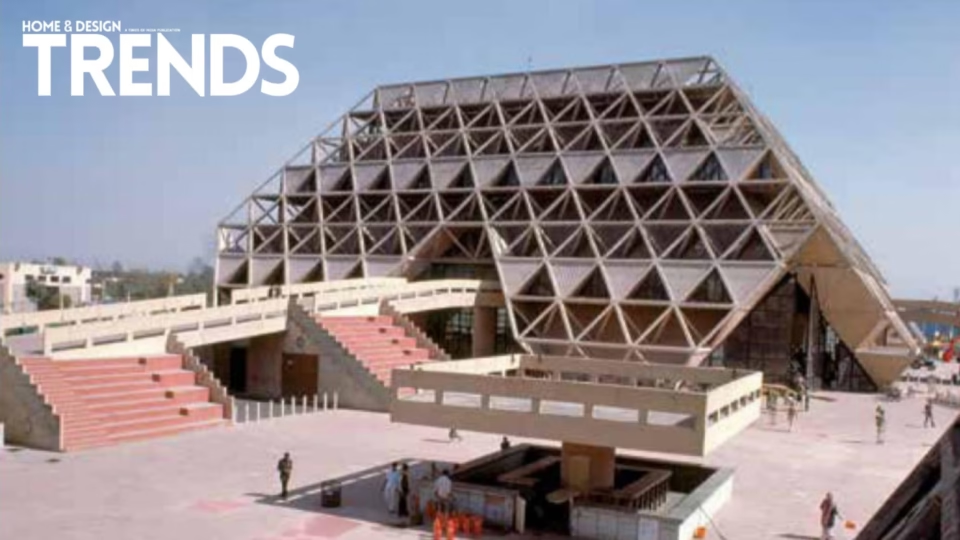
The Hall of Nations (1972) by Raj Rewal and Mahendra Raj symbolizes India’s modern architectural identity. Its precast RCC spaceframe pyramid blends structural efficiency with climate-responsive design. Evolving from a trade hub to a cultural landmark, its geometric perforations and glass façade create a versatile, comfortable public environment.
The National Institute of Water Sports (NIWS), Goa, designed by M:OFA Studio, captures the essence of a surfer’s journey—between man and sea. Architect Manish Gulati describes it as a transitional space, where architecture mirrors the rhythm of waves, rising and falling in motion. Commissioned in 2010 through an international competition, the 220-tonne structure embodies fluidity, adventure, and connection, serving as Asia’s iconic hub for water sports.
The Aearth Resort in Naggar, Manali, designed by M:OFA, draws inspiration from local Himachali architecture, blending slate walls, pine wood, and sloping roofs with a contemporary aesthetic. Conceived like a paper fold, the design features biomorphic cottage pods resembling anthills and a main building with an origami-style roof. Using a tubular steel framework with ferrocement shells, skylights, and green roofs, the resort harmonizes architecture with nature, creating an immersive, organic retreat.
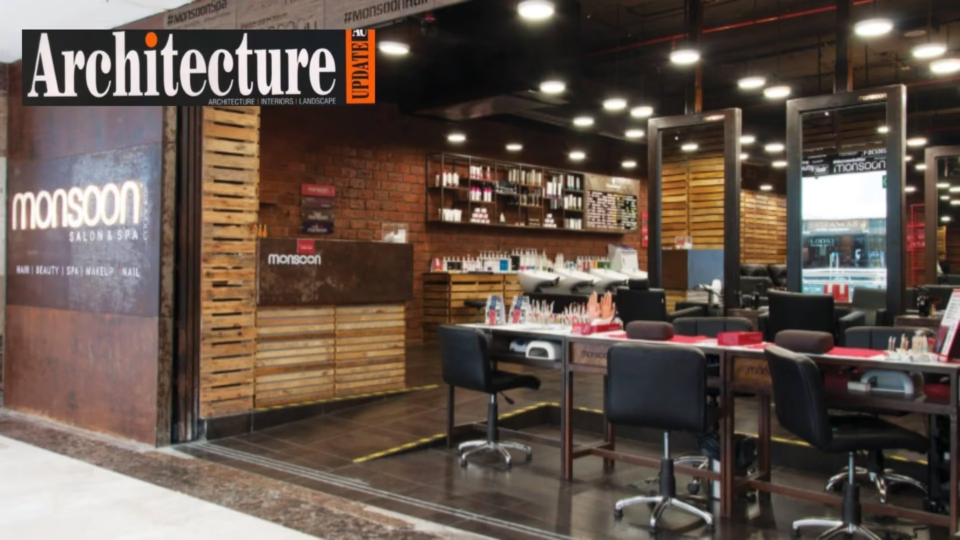
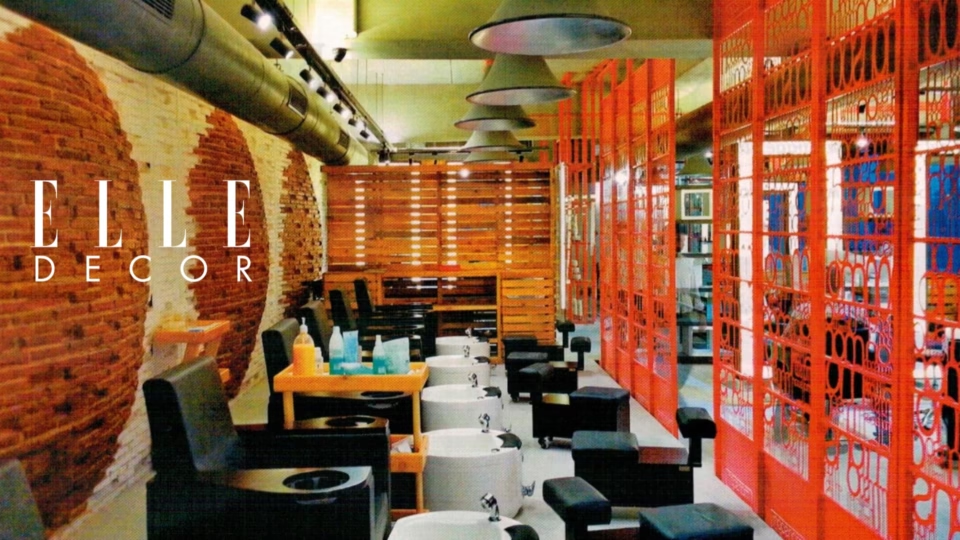
Monsoon Ambience in Gurgaon, designed by M:OFA, exemplifies retaining a brand’s identity through architecture. Located within a high-end mall, the salon uses a rustic material palette, exposed brick, and wooden planks with controlled lighting to balance the urban context and service environment. Spaces are carefully segregated yet fluid, merging individual privacy with collective activity. Across multiple outlets, the design evolves pragmatically, maintaining a distinct yet continuous brand vocabulary reflective of Monsoon’s ethos.
Manish Gulati of M:OFA Studio views architecture as a living, adaptive organism that responds to humans and nature alike. He emphasizes contextual, fluid design that evolves with lifestyles while fostering a symbiotic relationship with the environment. Architecture should withstand seasons, accommodate all life forms, and embrace sustainability through water, energy, and waste management. Buildings like the DPCC Head Office exemplify this philosophy, merging innovative design with ecological sensitivity.
Located in a lively New Delhi neighborhood, the B123 Residence replaces a chaotic street corner of tangled wires and a ficus tree with an architectural reflection of family life. Designed to counter urban disorder, the home embodies harmony and connection through spatial fluidity, seamlessly weaving together the complex relationships and daily rhythms of its residents within a calm and cohesive environment.
M:OFA Studio designed Monsoon Salon & Spa, New Delhi and Toni & Guy, Gurgaon, blending global brand language with local context. Both interiors emphasize openness, functionality, and light through neutral palettes, glass, recycled materials, suspended elements, and double-sided mirrors. The spaces distinctly zone salon activities while maintaining visual flow, using materials like vitrified tiles, RCC, MDF, and LED lighting to create sleek, rejuvenating, and energy-efficient environments.
“Pensieve,” a public art installation in New Delhi by MOFA Studio, redefines public space by merging art, sustainability, and functionality. Made from 1,200 recycled shipping pallets, 900 matchboxes, and solar-powered furniture, it evokes nostalgia for Delhi’s historic ruins where imagination thrived. The installation encourages interaction and environmental awareness, proving that sustainable design can inspire cultural reflection while withstanding vandalism and maintenance challenges in India’s urban context.
Commissioned in 2010 via an international competition by the Ministry of Tourism and Government of Goa, NIWS is envisioned as a pioneering water sports facility in Asia. The project aims to connect people with leisure water sports while offering advanced technology, world-class facilities, and diverse opportunities. It is designed to provide a unique recreational experience, blending innovation with accessibility, and positioning Goa as a leading destination for water-based leisure activities.
A kitchen is the functional core of a home, demanding efficiency and thoughtful planning. Its design must consider space, workflow, food habits, and appliance placement—especially in Indian households. Commercial kitchens are even more complex, requiring study of team workflow, anthropometrics, platform proportions, and time-optimized layouts for seamless food preparation and service.
‘Manifestation of Fluid Architecture’—condensed to M:OFA—defines the Delhi studio’s identity and its belief that design is an attitude. Their open, free-flowing workspace reflects high-energy collaboration, where passionate designers co-create responsibly. Subtle yet impactful use of recycled materials reinforces the firm’s core philosophy of sustainable, sensitive, and collaborative architecture.
Omaxe’s Forest Club, designed by M:OFA Studios, is a premium recreational facility integrated into a high-end residential project. With limited FAR due to 12-story housing towers, the architects devised a state-of-the-art subterranean design, utilizing basements and sunken courts with skylights to bring natural light. The 15,000 sq. ft. club accommodates a gym, squash court, snooker and card rooms, spa, and multipurpose halls, creating a layered, innovative architectural language within spatial constraints.
India’s urban landscape is transforming, with 98 smart cities—mostly Tier-II and III. Experts cite challenges like labor and land acquisition but note growth via services, manufacturing, and quality-of-life migration. Tanushree and Manish Gulati of M:OFA stress valuing each city’s unique character. Promising examples include Bhopal, Jaipur, Indore, Nagpur, Pune, and Goa, blending infrastructure, technology, and cultural identity.
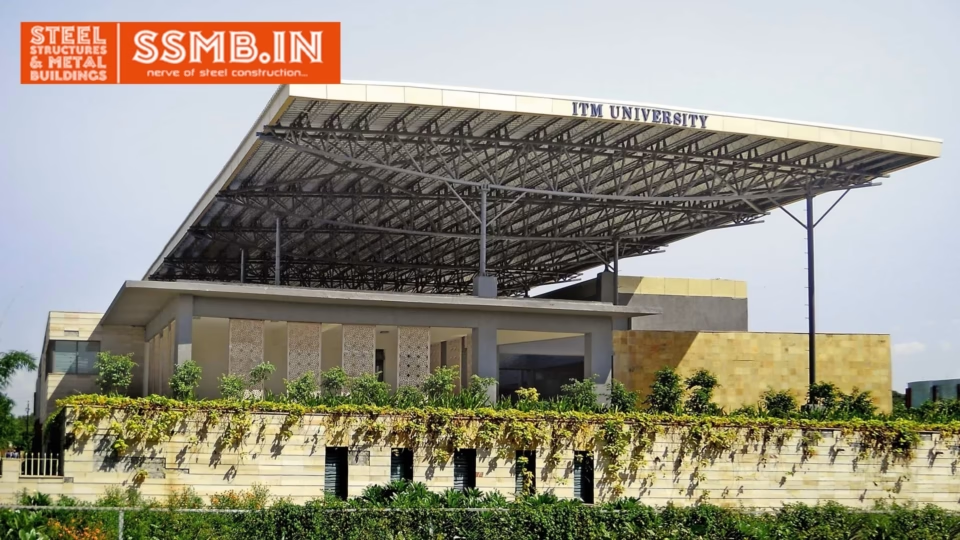
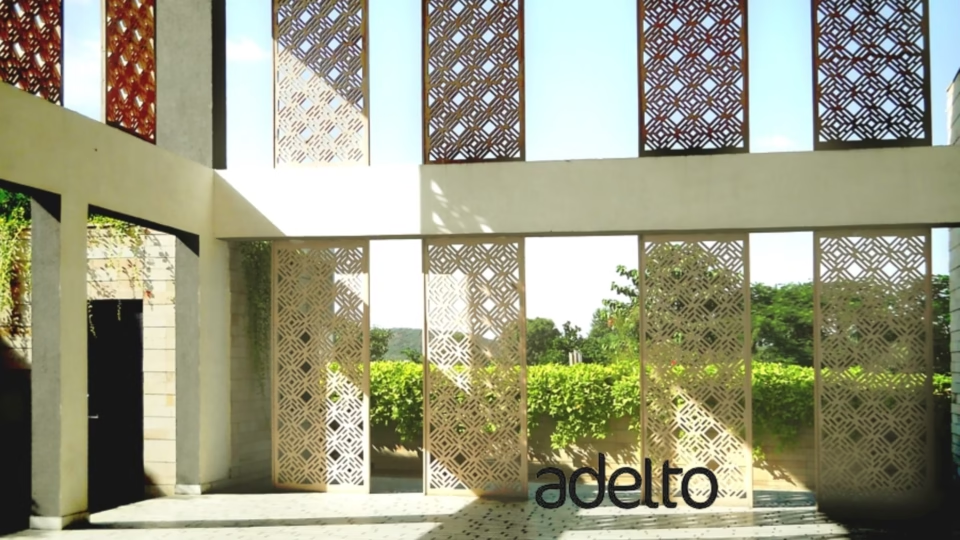
The ITM School of Business in Gwalior, designed by MOFA, integrates tradition and modernity through parametric design. Using locally sourced white Dholpur sandstone, it maintains low environmental impact while preserving local heritage. The structure adapts to Gwalior’s hot, humid climate with parasol roofs and jaalis. Engineers from Roark Consulting resolved complex geometries into a constructible two-floor concrete SMRF frame topped with a skewed steel canopy.
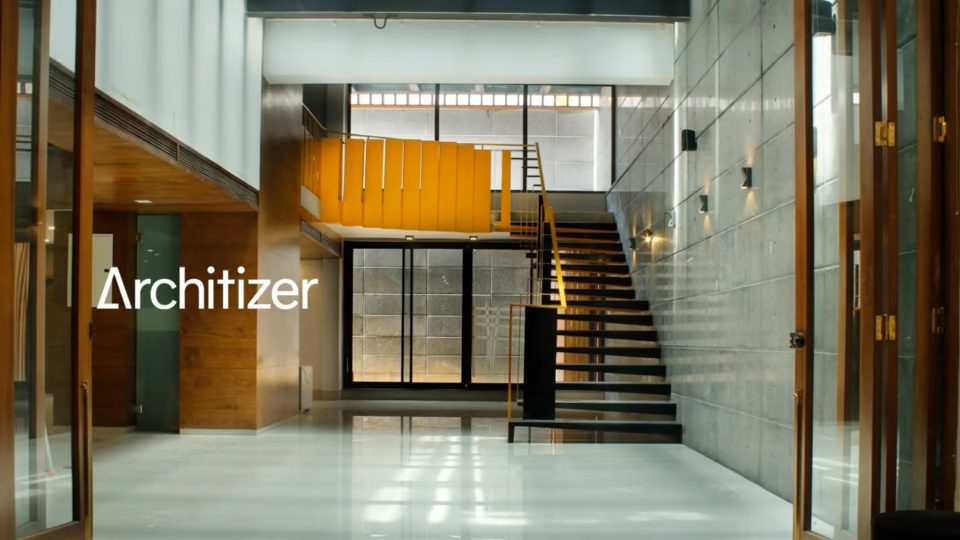
House B123 by MOFA Studios in New Delhi is a multi-generational home designed to unite three generations under one roof while maintaining individual privacy. Centered around a luminous courtyard with a glass plunge pool and skylight, the house connects all levels through cut-outs, bridges, and visual links. Its inward-looking design balances exposed concrete, reclaimed wood, and steel artistry, creating a dynamic, light-filled home that celebrates family, heritage, and modern living.
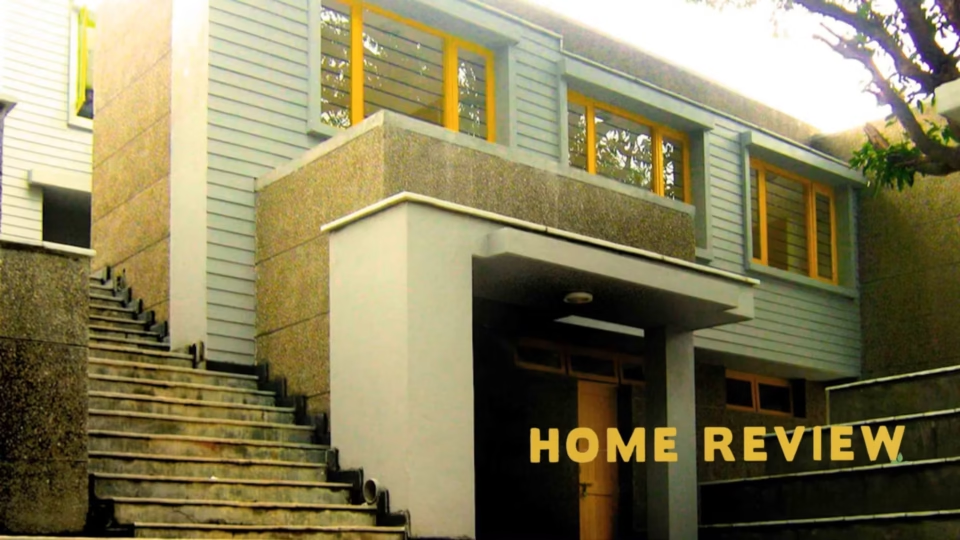
House B123 in New Delhi, designed by M:OFA Studios, is an 11,500 sq. ft. joint family home spread over five levels. With a compact 300 sq. yard plot, the design emphasizes verticality and interconnectivity, featuring an atrium for visual links between floors. The façade and interiors use exposed concrete and reclaimed wood. Public and private spaces are carefully balanced, while a custom yellow staircase adds vibrancy, reinterpreting traditional Indian architecture for contemporary family living.
The Golden Tusk Resort by M:OFA Studio is a true agro-resort designed to immerse urban travelers in authentic rural life. Surrounded by nature, its cottages use local materials in a contemporary style. Guests can engage with farm life through activities like poultry care, cattle feeding, fish farming, and elephant rides. The design emphasizes sustainability with local stone masonry and reclaimed wood carpentry, blending comfort with ecological responsibility.
Tanushree Gulati of M:OFA Studio, New Delhi, admires designer Ruchika Grover of Odyssey for her innovative work with stone. She believes true design excellence stems from passion and innovation — qualities that elevate creation beyond convention. For Tanushree, such dedication reflects a designer’s deep commitment to their craft and marks the journey of pushing creative boundaries.
The ITM School of Business in Gwalior by M:OFA Studios blends sustainability with tradition. Using locally sourced Dholpur sandstone, it reflects regional heritage while maintaining a low environmental footprint. A lightweight steel parasol roof enables natural cooling through convection. Jaali screens filter light and reduce heat, combining traditional craftsmanship with modern detailing. The design creates an economical, climate-responsive, and green institutional building suited to Gwalior’s hot climate.
In India’s harsh climate, facades and roofing systems are crucial not just for aesthetics but for climate response. They act as a barrier between exterior heat, dust, and humidity while allowing light, ventilation, and breathability. Materials like terracotta, louvers, rain façades, and insulated panels enable passive cooling. When selecting materials, aesthetics, durability, local availability, and cost-efficiency must be balanced to ensure long-term performance and sustainability.
“Pensieve,” an installation by Manish Gulati at ID 2014, drew inspiration from the “memory basin” in Harry Potter. Built from over 1,200 discarded shipping pallets, it symbolized Delhi’s ruins and their overgrown beauty. The grass-covered structure, created in five days using composted waste, became a public space for reflection and dialogue—bringing art to the people and promoting cultural growth beyond galleries.
The National Institute of Fashion Technology (NIFT) campus in Kangra, designed by M:OFA Studio, was a winning entry in a 2009 national competition. Planned as a zero-discharge green campus on hilly terrain, the design integrates existing banyan, mango, and silver oak trees. Inspired by fashion design’s artistic expression, M:OFA wove the architecture into its natural surroundings, reflecting agricultural fields and organic urban growth through fluid, textural forms.
M:OFA Studio (Manifestation of Fluid Architecture), founded in 2007 by Manish and Tanushree Gulati in New Delhi, champions sustainable, adaptive design. Their work ranges from the nature-integrated NIFT Kangra campus to the dynamic, recycled-material interiors of the Delhi Daredevils office, reflecting innovation, contextual sensitivity, and fluid architectural thinking.
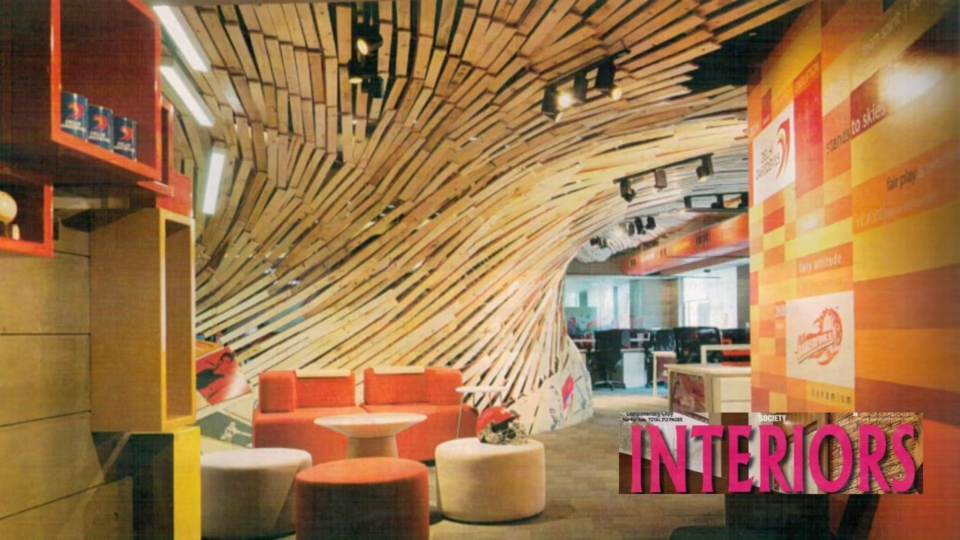
The Delhi Daredevils’ new office, designed by M:OFA in Delhi, embodies the team’s vibrant identity and dynamic energy. The concept merges work, play, and meeting spaces to create a continuous flow of sporting enthusiasm. At its core lies the Think Tank Lounge, featuring an artistic installation of wooden planks arranged in a swirling pattern, symbolizing motion, creativity, and the team’s energetic spirit.
The 3,000 sq.ft. salon is designed as an open, continuous space divided into dry, wet, and spa zones. Using natural, reclaimed materials like exposed concrete, brickwork, and wood from shipping pallets, the design reflects a post-monsoon theme. Exposed ducts and light fixtures made from old “Bhompoos” add character. Built at ₹2,450/sq.ft.—about 50% below market rates—the industrial aesthetic blends sustainability with a distinctive brand identity.
Manish Gulati and his team at M:OFA Studio designed a Delhi home that skillfully accommodates the dynamics of a joint family. Anchored around an open central core that floods all three floors with natural light, the design draws from the traditional courtyard house concept. The plan seamlessly balances private and shared areas, fostering interaction while maintaining individual privacy.
The project, a 2009 national competition winner, was designed as a zero-discharge green campus on steep, tree-covered terrain. Inspired by fashion design as an art form, the architects integrated the structure with its natural surroundings, mimicking agricultural patterns and Himalayan formations. The design respected site contours and existing trees—150 hostel rooms were created without cutting a single tree, using interlocking cubical forms and light courts that blend architecture with nature.
The 3200 sq.ft. Delhi Daredevils office features a striking installation made from 4-inch x 3-foot recycled wooden planks sourced from waste shipping pallets. Designed in collaboration with Steelcase, the workspace promotes flexible, collaborative working while maintaining individual desk identity. A dedicated conference room accommodates sponsor meetings and formal discussions, reflecting a blend of sustainability, creativity, and functionality in the office’s overall design.
For the 2014 IPL season, M:OFA Studios, led by Ar. Manish Gulati, redesigned the Delhi Daredevils office to reflect the team’s youthful energy and bold new identity. Inspired by the team’s logo, the dynamic workspace blends formal and casual zones, including the innovative “Think Tank Lounge”—a swirl-like structure symbolizing cricket strokes, crafted from recycled wood and steel, embodying creativity, teamwork, and sustainability.
Designed by M:OFA Studios, the IPL Delhi Daredevils office captures the energy and passion of cricket through dynamic spatial design. The semi-formal open plan encourages teamwork, with the standout feature being The Think Tank Lounge—a swirl-shaped installation inspired by batsmen’s strokes and stadium energy. Constructed from recycled shipping pallets, the space merges sport, creativity, and collaboration in a vibrant, fluid environment of reds, ambers, and greys.
Designed by M:OFA Studios in New Delhi, The Pensieve is an experiential pavilion symbolizing the fluid thoughts of childhood from the 80s–90s. Inspired by Delhi’s ruins, it uses 1,200 recycled shipping pallets to form contemplative stone-like walls filled with “drawers of memories.” Architect Manish Gulati describes it as a state of mind—a celebration of nostalgia, creativity, and the timeless human spirit of reuse and imagination.
Architect Manish Gulati, founder of M:OFA Studios and alumnus of CEPT Ahmedabad, believes true sustainability begins with a change in mindset. With over 15 years of experience, he emphasizes the importance of waste management, green building practices, and the need for stronger incentives to promote eco-conscious design. Gulati advocates architecture that evolves responsibly, integrating innovation with environmental harmony.
Designed by Ar. Manish Gulati of M:OFA Studios, the 3,200 sq. ft. Delhi Daredevils corporate office captures the team’s youthful, high-energy spirit. Located in Aria Towers, JW Marriott, the space reflects Delhi’s vibrant character through dynamic design elements like team merchandise displays, 3D graphics, sporty furniture, and ducting embossed with the brand name, creating an environment that radiates enthusiasm, identity, and motion.
Founded in 2002 by Manish Gulati and his wife Tanushree, M:OFA Studios was born from a belief that architecture should transcend rigid grids and dimensions. For Gulati, architecture is a fluid expression of life, embodying its complexity, simplicity, and paradoxes. Each project at M:OFA undergoes layered planning and interpretation, resulting in designs that pulse with movement, emotion, and vitality.
For the Delhi Daredevils’ new office, architect Manish Gulati of M:OFA Studios transformed the team’s dynamic new logo into a vibrant, youth-driven workspace. The 3,200 sq.ft. office embodies the energy of a packed stadium, with fluid, open layouts merging work, play, and meeting areas. The highlight — the “Think Tank Lounge” — features a swirling wooden installation inspired by a batsman’s strokes, symbolizing motion, passion, and teamwork.
Homes and offices reflect their inhabitants beyond décor. M:OFA Studios demonstrates this in the Delhi Daredevils head office, where courage and team spirit are embedded in spatial design. With evolving materials like structural aluminium and advanced flooring, technology expands creative possibilities while demanding responsibility. The iGen Design Forum reinforces how young designers’ innovation and idealism can shape a future where architecture truly makes a difference.
Ar. Manish Gulati of M:OFA Studio, a CEPT Ahmedabad alumnus, designed The Club House at Forest, Noida—an FSI-driven, partially subterranean recreation facility with a spa, bar, and gym. His Golden Tusk Resort near Jim Corbett exemplifies nature-centric tourism, integrating organic farming, animal husbandry, and sustainable living to foster harmony between built form and environment.
Founder of M:OFA Studios in 2002, Manish Gulati believes in “creating architecture with a soul.” His vision focuses on crafting contemporary, innovative designs that place India on the global architectural stage. When not designing, he relaxes by experimenting with his own food recipes. In this issue, he shares insights into his monsoon-inspired spa project in New Delhi titled “Rain Rituals.”
Designed by M:OFA Studios, The Golden Tusk Resort in Ramnagar offers urban travellers an immersive countryside experience rooted in coexistence with nature. Near Jim Corbett National Park, it blends contemporary cottages with animal farms and organic gardens, encouraging sustainable living and reconnection with the natural environment through architecture and activities.
M:OFA Studio designed the Monsoon Salon and Spa as a tranquil retreat that captures the essence of the monsoon through colours, textures, and lighting. Inspired by the refreshing calm after the first rains, the space evokes serenity and renewal. Located in an upscale neighbourhood, it offers an escape from urban stress.
The NIFT Kangra campus in Himachal Pradesh is a sustainable, contour-hugging design that preserves existing banyan, mango, and silver oak trees. Intersecting cuboids interpret fashion as art, while the girls’ hostel and light courts create shifting positive and negative spaces. Circulation mimics organic village streets, fostering fluid interaction between students, landscape, and nature.
M:OFA designed a pavilion using recycled wood, inspired by the free and imaginative thoughts of children. The structure evokes simpler times, encouraging visitors to engage with the world beyond digital screens. It serves as a space for reflection, creativity, and play, emphasizing sustainability through the use of recycled materials while celebrating childhood curiosity and unobstructed thinking.
The Durian Society Interiors Design Competition and Awards 2014 North Zone jury session was held on January 22 at Durian Industries, New Delhi. The jury included Manish Gulati (M:OFA Studios) alongside other eminent architects and designers, who reviewed entries from Delhi, Chandigarh, Ajmer, and Jaipur, selecting the top two winners in each category after four hours of discussion.
Manish Gulati, Principal Architect and Director of M:OFA Studios, views architecture as a fluid, life-like expression beyond rigid grids and conventions. With 14 years of experience, he leads M:OFA’s holistic approach across architecture, interiors, and urban design, creating innovative, context-sensitive, forward-looking projects that challenge norms while harmonizing with their environment.
Manish Gulati, founding principal of M:OFA, sees architecture as an ever-evolving organism where rules must be mastered before reimagining them. Expanding from residences to international stadiums, the firm blends research, intuition, and sustainability to create cohesive, innovative environments, exemplified by the futuristic Noida apartment and the ITM School of Business, Gwalior.
M:OFA Studios crafts interiors that fuse modern minimalism with classical and artisanal detail. Rusted steel and weathered wood pair with earthy greens, yellows, indigos, turquoises, and rusts. Gold or bronze accents, jointless acrylic furniture, geometric/oriental sheers, metallic-thread fabrics, Swarovski-studded headboards, Roman blinds, pastel rugs, and Kintsukuroi-inspired detailing highlight craftsmanship and material tactility.
M:OFA Studios’ Golden Tusk Resort offers urban travelers an authentic countryside experience, emphasizing sustainable living and a connection with nature. The resort features contemporary cottages built with local materials, an animal farm with poultry, cattle, goats, fish, and even elephant rides. Guests engage with the farm, organic gardens, and the surrounding forest, promoting resource efficiency, minimal waste, and an immersive, eco-friendly retreat in harmony with the natural environment.
Manish Gulati defines design as any creation made with consciousness, awareness, and purpose, while architecture is the manifestation of this confluence within a space. He views an architect as a fusion of artist, scientist, and philosopher—each challenging norms and shaping society. Gulati chose architecture in high school, drawn to creative activities like city modeling, clay work, soap carving, and painting, which naturally led him to pursue the profession.
M:OFA Studios’ winning design for the National Institute of Fashion Design (NIFT) campus in Kangra integrates sustainability with creative pedagogy. Set on steep terrain amidst banyan, mango, and silver oak trees, the campus uses a cellular growth of cubes to form academic blocks, girls’ hostels, and faculty residences, interspersed with light courts. Designed for 200 rooms, the project emphasizes self-sufficiency and zero discharge, reusing solid waste, stormwater, and sewage within the campus ecosystem.
Manish Gulati of M:OFA Studios notes that sports architecture in India has progressed beyond basic functionality to include recreation, sustainability, and user-centric design. Projects like the MP State Multi-Sports Stadium in Dewas showcase multifunctional, eco-conscious infrastructure, supported by M:OFA’s diverse portfolio—from indoor arenas to shooting, equestrian, and water sports facilities.
M:OFA Studios’ Golden Tusk Resort offers urban travelers a true countryside experience, emphasizing sustainable living and harmony with nature. Located near Jim Corbett National Park, the resort features cottages, villas, luxury tents, an animal farm, and organic gardens supplying a gourmet restaurant. Built with local materials, the design integrates seasonal changes, natural light, and a central water rivulet, creating serene, restorative spaces that connect guests intimately with the environment.
The National Institute of Fashion Design, Kangra, Himachal Pradesh, is a 2009 competition-winning project envisioned as a zero-discharge green campus on a steep, tree-covered terrain. Inspired by fashion’s textural nature, the design weaves architecture with its agricultural and Himalayan context. The girls’ hostel, built without cutting a single tree, integrates rooms and light courts around natural growth. Sustainable features include solar energy, water recycling, and on-site waste management, ensuring harmony between architecture and nature.
The ITM School of Business campus reflects India’s blend of tradition and global outlook. Facing the Aravalli Ranges, its solid stone mass and lightweight parasol roof reduce heat gain, while natural ventilation, convection currents, and lush greens create a sustainable, comfortable academic environment.
The NIFT Kangra campus is a zero-discharge green design that follows the hilly terrain while preserving existing trees. Inspired by agricultural textures and Himalayan forms, it blends built and natural environments through organic circulation, with rainwater harvesting, solar power, and on-site waste treatment supporting an immersive, sustainable learning experience.
The ITM School of Business, Gwalior reflects India’s identity—traditional yet globally aspirational. Designed by M:OFA Studio on NH-75, the campus harmonizes with the Aravalli ranges through a bold stone form and eco-luxury design that embodies sustainability, innovation, artistry, and world-class academic standards.
The ITM School of Business, Gwalior, embodies India’s new generation of entrepreneurs—grounded in tradition yet globally aware. Designed by M:OFA Studio, the campus harmonizes with the Aravalli ranges. Its solid stone mass with a lightweight parasol roof ensures sustainability, natural ventilation, reduced heat gain, and integrated greenery, creating an energy-efficient, environmentally responsive learning environment.
M:OFA’s Agro Resort is designed to immerse urban travelers in authentic countryside living while promoting harmony with nature. Using locally sourced materials in a contemporary style, the resort includes cottages, an animal farm with poultry, cattle, goats, fish, and even an elephant for forest rides. Guests experience daily farm life and enjoy meals prepared from the resort’s own organic vegetable, fruit, and herbal gardens, emphasizing sustainability and self-sufficiency.
Designed by Manish Gulati of M:OFA Studios, the ITM School of Business in Gwalior exemplifies sustainable architecture that harmonizes with its natural surroundings near the Aravalli Ranges. A large parasol roof supported by slender columns reduces heat gain and energy use, while natural ventilation and greenery promote thermal comfort. The Dholpur stone-clad structure encloses fluid, courtyard-inspired interiors that encourage reflection, openness, and creativity
Manish Gulati, CEPT alumnus with ETH Zurich training, founded M:OFA Studios in 2002 to pursue design-centric, innovative, and sustainable architecture. Alongside Tanushree Gulati, CEPT-trained Civil Engineer and Urban Infrastructure Planner, the firm blends research with contextual design. Their ITM School of Business, Gwalior, exemplifies this approach through passive cooling, courtyards, and harmony with the Aravalli landscape.
Manish Gulati, Principal Architect of M:OFA Studios, demonstrated his creativity beyond architecture in ELLE Décor’s culinary challenge with his signature dessert — Floating Mango Ravioli in Coconut Custard Foam and Chocolate Soil. Using molecular gastronomy, he crafted layered textures and flavours, reflecting his philosophy of innovation, precision, structure, and sensory experience across design and cuisine.
Set on a 125-acre site along NH-75, the ITM School of Business by M:OFA Studio blends bold contemporary design with regional sensitivity. Designed as an interactive, low-cost, and green institution, it uses local materials like Dholpur sandstone and a prefabricated steel parasol roof for sustainability. The structure’s courtyards and bridges foster openness and collaboration, reflecting M:OFA’s philosophy of fluid, soul-elevating architecture.
Designed by M:OFA, The Golden Tusk Resort near Jim Corbett National Park blends nature, sustainability, and rural living into an immersive eco-retreat. Built with local materials, it reconnects visitors with nature through organic gardens, animal farms, and cottages inspired by local craftsmanship. A water rivulet forms the resort’s central spine, linking villas, a spa, and recreational spaces, while workshops promote self-sufficiency and sustainable living for urban travelers.
Designed by M:OFA, the ITM School of Business in Gwalior (completed in 2012) sits gracefully against the Aravalli ranges on a 125-acre site. The structure combines traditional Indian courtyard principles with sustainable modern design, using a lightweight parasol roof and Dholpur sandstone jaalis for natural cooling and shading. Its fluid interiors encourage openness and creativity, while the courtyards and screens celebrate Gwalior’s architectural heritage and eco-conscious design.
The ITM School of Business, Gwalior by M:OFA reflects India’s evolving business spirit—balancing global outlook with traditional roots. Situated along NH-75, the design harmonizes with the Aravalli ranges, featuring a stone-clad mass under a light industrial roof that enhances ventilation and reduces carbon footprint. Inspired by courtyard planning and Gwalior’s jaali tradition, the building promotes sustainability, natural cooling, and creativity—symbolizing a fusion of modern innovation and cultural continuity.
Designed by M:OFA, the ITM School of Business, Gwalior embodies India’s evolving business ethos—traditional yet globally progressive. Along NH-75, its solid stone mass and lightweight parasol roof blend with the Aravalli ranges while enabling passive cooling. Courtyard planning, natural ventilation, and dholpur sandstone jaalis merge sustainability with cultural identity, fostering reflection, openness, and innovative learning.
The ITM School of Business, Gwalior by M:OFA reflects India’s evolving business ethos—balancing tradition and modernity. Along NH-75, the solid stone mass capped by a lightweight parasol roof harmonizes with the Aravalli ranges while enhancing natural ventilation and thermal comfort. Courtyard planning, fluid interiors, and dholpur sandstone jaalis unite sustainability, cultural roots, and progressive education.
Over the past decade, India’s business culture has fused heritage with global exposure—reflected in the ITM School of Business, Gwalior. Located on NH-75, the campus integrates seamlessly with the Aravalli Ranges, expressing an architectural balance of ambition, stability, and contextual harmony.
As Philip Johnson said, “All architecture is shelter… great architecture stimulates those within it.” The ITM School of Business, Gwalior, designed by Manish Gulati of M:OFA, embodies this belief. Located along National Highway 75, the campus harmoniously blends with its natural surroundings and the Aravalli Ranges. Its bold yet humble design integrates structure and landscape, creating an inspiring environment that connects deeply with its users and context.
Designed by Manish Gulati of M:OFA (Manifestation of Fluid Architecture), the Toni & Guy salon in Gurgaon embodies a fluid, hair-inspired design that merges style with purpose. The interiors balance functionality, fashion, and brand identity through dynamic forms and refined detailing. Evoking the graceful flow of tresses, the design enhances user experience while maintaining a sleek, modern aesthetic that reflects both the brand’s global appeal and M:OFA’s creative philosophy.
The Delhi Pollution Control Committee Head Office by M:OFA is conceived as an urban “sponge,” purifying air and water. The six-storey building harnesses northwestern winds, diffused daylight, clay-lined foam concrete walls, and vertical green systems for air filtration. Rooftop treatment, rainwater harvesting, sewage recycling, photovoltaics, and biofuel systems create a fully co-generative, sustainable workplace.
The NAAD Amphitheatre in Gwalior by M:OFA Studios seats nearly 3,000 people, prioritizing audience experience through precise seating and lighting design. Sightlines, acoustics, spacing, and comfort guide the seating geometry across stalls, balconies, and dress circles. Dimmable house–stage lighting, aisle guides, and dark finishes ensure clarity, focus, and immersive performances.
The Delhi Pollution Control Committee office by M:OFA Studios functions as an “urban sponge,” integrating sustainability into research and administration spaces for 200 staff. Photovoltaic parasol roofs generate power while rainwater and sewage are treated and reused. Green walls, cavity filters, roof gardens, and chilled beam systems create a self-sustaining, educational, and socially impactful building.
The 6,500 sq.ft duplex apartment in Noida by M:OFA Studios showcases a redefined contemporary style marked by fluid spatial design. Amorphous forms flow seamlessly from ceilings to walls and floors, creating continuity and movement throughout the interiors. Furniture, materials, and colors are carefully integrated to enhance this organic aesthetic, producing a cohesive, dynamic living environment. The project exemplifies M:OFA’s signature blend of creativity, spatial fluidity, and material harmony.
Leftover waste is used as fertilizer in the gardens and landscaping and the clean water is used in a chilled beam system to provide cooling. The new office for the Delhi Pollution Control Committee in New Delhi is underway and is expected to be complete in 2014.
Founded in 2007 by Manish Gulati, Tanushree Gulati, and Abhinav Chaudhary, M:OFA (Manifestation of Fluid Architecture) views architecture as a living, adaptable response to life and nature. Inspired by Lord Nataraja’s cosmic dance, the firm embraces experimentation, spontaneity, and dialogue, creating expressive designs that continuously evolve beyond conventional boundaries.
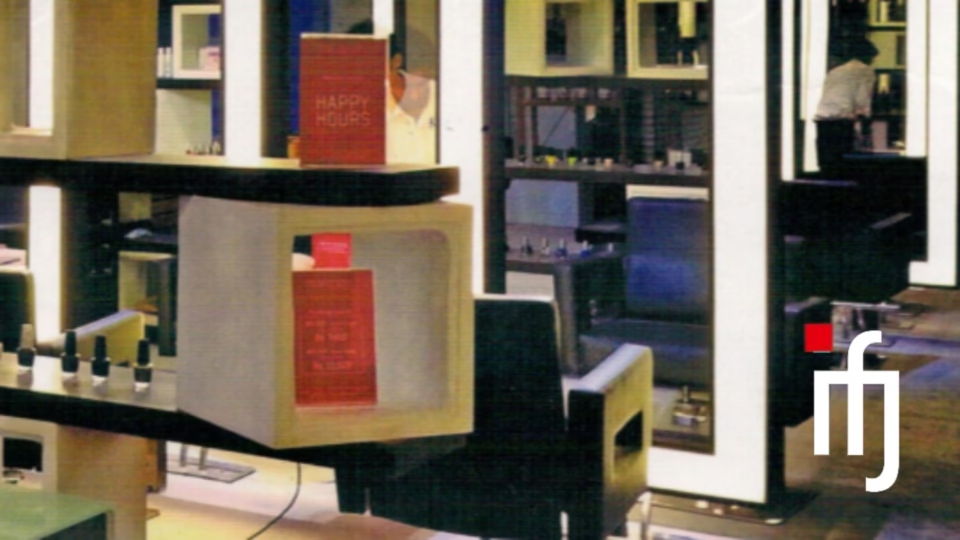
The Toni & Guy salon in Gurgaon, designed by M:OFA Studios, reinterprets the brand’s classic black, white, and grey palette through a concept inspired by hair and comb symbolism. Suspended laser-cut MDF panels and wooden louvres define spaces, reflecting the flow of hair and interaction between stylist and client. The open-plan layout features paired styling tables, LED-lit mirrors, and carefully arranged lighting, creating a functional yet dramatic interior with therapy, spa, and colouring areas.
The AEARTH Resort by M:OFA Studios in Naggar, Manali, is a boutique art retreat inspired by local Himalayan architecture. Nestled among deodar trees at 1760 meters, it harmonizes with the natural topography while preserving ecological balance. Using slate walls, pine wood, and sloping roofs, the design merges tradition with innovation. The resort features biomorphic cottage pods resembling ant hills and a main building with an origami-style roof, reflecting geomorphic and sustainable design principles.
M:OFA Studios embraces an interdisciplinary, research-driven approach, integrating architecture, planning, engineering, management, and finance. Extensive simulations, case studies, and collaborative discussions guide each project, fostering innovation in design, technology, and sustainability. By exploring programmatic, technical, and environmental dimensions, M:OFA continually sets benchmarks for holistic, green, and forward-thinking architecture.
For a striking living room, the Gulatis suggest creating a visual treat with surprises—oversized objects, art installations, bold colours, prints, textures, or eccentric furniture. Personalize the space by repurposing unexpected materials, like stretching rich zari sarees on walls with backlighting. Experiment with light, colour, and varied textures, using deep pinks, bottle greens, or dark browns as accents. These strategies make interiors expressive, unique, and unforgettable.
Designed for Aman and Bina Mehra, this two-level penthouse exemplifies fluid architecture, where walls curve, floors rise and fall, and spaces seamlessly flow into one another. Ar. Manish Gulati crafted the home as a living organism—responsive and warm. Natural light, pristine whites, and sculptural forms define the interiors, while a lounge and a tree-bark bar add organic charm to this expressive, contemporary residence.
Located on Bhopal’s outskirts, this world-class shooting academy for the Ministry of Sports & Youth Welfare comprises 10m, 25m, 50m, and twin trap & skeet ranges. Inspired by the dynamics of a bullet’s trajectory, M:OFA designed fluid, merging forms that blend into the undulating terrain. The design integrates sustainability with a 3.5-acre water catchment basin, making it self-sufficient while meeting ISSF and NRAI standards within cost-effective parameters.
Ar. Manish Gulati of M:OFA Studios envisions bathrooms as intimate, experiential spaces—beyond mere functionality. His designs create spa-like environments with features like Jacuzzis, steam cubicles, and large windows opening to nature. Using luxurious materials such as Australian marble and Bisazza mother-of-pearl tiles, the bathrooms exude a Zen-inspired calm—spaces as chic as a living room and as comfortable as a lounge.
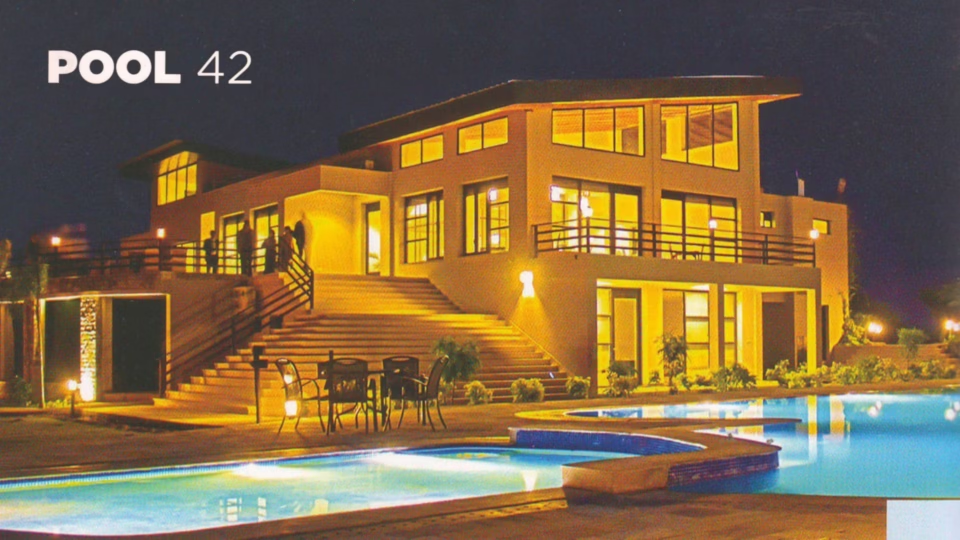
Designed by Ar. Manish and Tanushree Gulati of M:OFA Studios, this residence perches dramatically on the rugged slopes of the Aravalli range. Celebrating the site’s raw beauty, the design integrates natural rock strata, historical context, and dried lake views. Divided seasonally, the west wing hosts winter spaces, while summer areas lie between the cliffs—creating a poetic balance between architecture and nature.
Led by Ar. Manish Gulati, Tanushree Gulati, Aakriti Sood, and Sajal Das of M:OFA Studios (Manifestation of Fluid Architecture), this Noida penthouse redefines spatial fluidity. Designed for Aman Mehra, the four-bedroom duplex with a terrace pool transforms from a bare shell into a seamless sculptural home. Twisting, melting, and flowing forms create dynamic yet functional spaces—balancing innovation, privacy, and elegance within practical constraints.
Designed by Ar. Manish Gulati of M:OFA Studios, this penthouse exemplifies fluid architecture where walls seem to float, twist, and reshape to meet functional needs. Using sheesham wood louvers, ferrocement, and layered plywood, the design merges light, material, and movement into a seamless composition. Custom furniture and ambient lighting enhance the spatial drama, transforming the house into an experiential, sculptural living space.
The Sports and Youth Welfare Department has initiated plans to renovate Bhopal’s Aishbagh Stadium, with Sports Director Sanjay Chaudhary and architects Manish and Tanushree Gulati leading the effort. The 25-year-old stadium will receive a modern facelift, including new turf, pavilion upgrades, and improved seating and lighting. Estimated at ₹3 crore, the project aims to restore the city’s emotional landmark with funding from the Jawaharlal Nehru National Urban Renewal Mission.
प्रदेश के एकमात्र हॉकी स्टेडियम ऐशबाग का जल्द कायाकल्प किया जाएगा। खेल विभाग ने दिल्ली से आए आर्किटेक्ट्स के साथ स्टेडियम का निरीक्षण किया। नया टर्फ जवाहरलाल नेहरू अर्बन एनुअल मिशन योजना के तहत बदला जाएगा, जिसमें 70 प्रतिशत राशि योजना से और 30 प्रतिशत खेल विभाग वहन करेगा। इस परियोजना से स्टेडियम को आधुनिक रूप मिलेगा और राज्य में हॉकी के विकास को नया प्रोत्साहन मिलेगा।
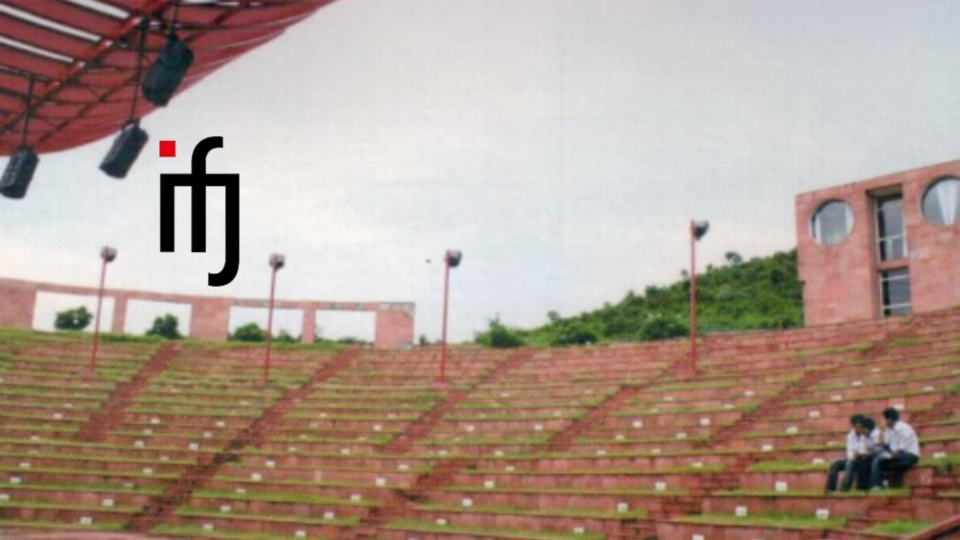
आईटीएम यूनिवर्सिटी, ग्वालियर का एम्फीथिएटर अपनी अनोखी डिजाइन और प्राकृतिक माहौल के लिए विशेष है। आर्किटेक्ट मनीष गुलाटी (M:OFA Studios, दिल्ली) द्वारा डिजाइन किया गया यह थिएटर इटली, ग्रीस और ग्वालियर की ऐतिहासिक वास्तुकला से प्रेरित है। घास लगी सीढ़ीनुमा दर्शकदीर्घा, बॉस साउंड सिस्टम, वाटर हार्वेस्टिंग, झरोखेदार दीवारें और दीपक जैसी रोशनी इसकी विशेषताएं हैं। डेढ़ एकड़ में फैले इस थिएटर में लगभग 3000 लोगों की क्षमता है।
Designing the Ghosal duplex was a deeply introspective journey for Ar. Manish Gulati and M:OFA Studios—one that celebrated emotion, memory, and material. Translating the couple’s warmth and stories into spatial form, the design used textures like frozen saris in epoxy, wicker walls, copper lamps, and sheesham wood. This project redefined design as “non-designing”—a process of unlearning theory to create spaces born from lived experiences.
For M:OFA Studios, design is an intellectual and emotional journey—an introspective process that merges client psychology, purpose, and innovation. In the Wadhwa residence, Noida, Ar. Manish Gulati and his team explored “depths in white,” crafting a minimalist space through seamless blends of Corian, steel, and acrylic. The result was a sculptural harmony of light, material, and emotion—transforming a home into an immersive art experience.