Please enable javascript on your browser or try a different browser or device.
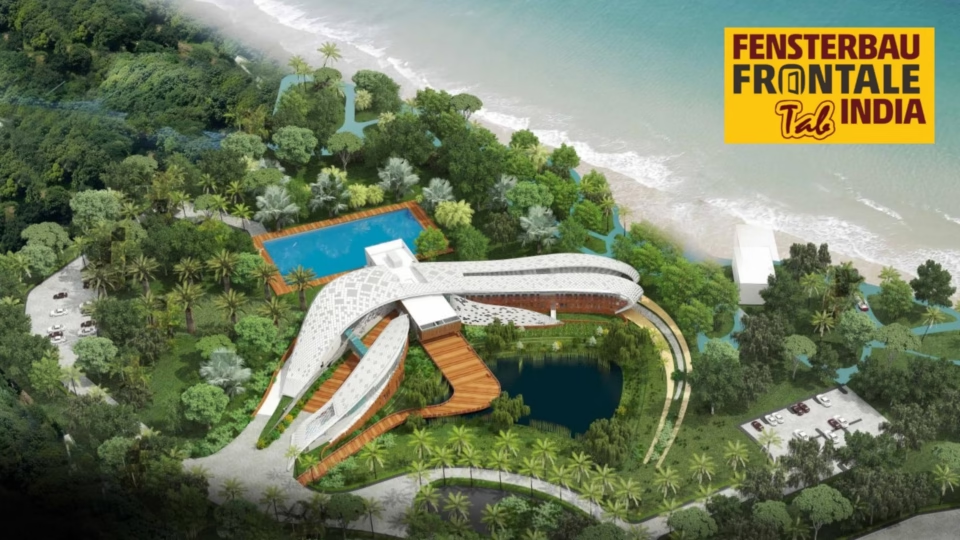
Commissioned in 2010 via an international competition by the Ministry of Tourism and Government of Goa, NIWS is envisioned as a pioneering water sports facility in Asia. The project aims to connect people with leisure water sports while offering advanced technology, world-class facilities, and diverse opportunities. It is designed to provide a unique recreational experience, blending innovation with accessibility, and positioning Goa as a leading destination for water-based leisure activities.
A kitchen is the functional core of a home, demanding efficiency and thoughtful planning. Its design must consider space, workflow, food habits, and appliance placement—especially in Indian households. Commercial kitchens are even more complex, requiring study of team workflow, anthropometrics, platform proportions, and time-optimized layouts for seamless food preparation and service.
‘Manifestation of Fluid Architecture’—condensed to M:OFA—defines the Delhi studio’s identity and its belief that design is an attitude. Their open, free-flowing workspace reflects high-energy collaboration, where passionate designers co-create responsibly. Subtle yet impactful use of recycled materials reinforces the firm’s core philosophy of sustainable, sensitive, and collaborative architecture.
Omaxe’s Forest Club, designed by M:OFA Studios, is a premium recreational facility integrated into a high-end residential project. With limited FAR due to 12-story housing towers, the architects devised a state-of-the-art subterranean design, utilizing basements and sunken courts with skylights to bring natural light. The 15,000 sq. ft. club accommodates a gym, squash court, snooker and card rooms, spa, and multipurpose halls, creating a layered, innovative architectural language within spatial constraints.
India’s urban landscape is transforming, with 98 smart cities—mostly Tier-II and III. Experts cite challenges like labor and land acquisition but note growth via services, manufacturing, and quality-of-life migration. Tanushree and Manish Gulati of M:OFA stress valuing each city’s unique character. Promising examples include Bhopal, Jaipur, Indore, Nagpur, Pune, and Goa, blending infrastructure, technology, and cultural identity.
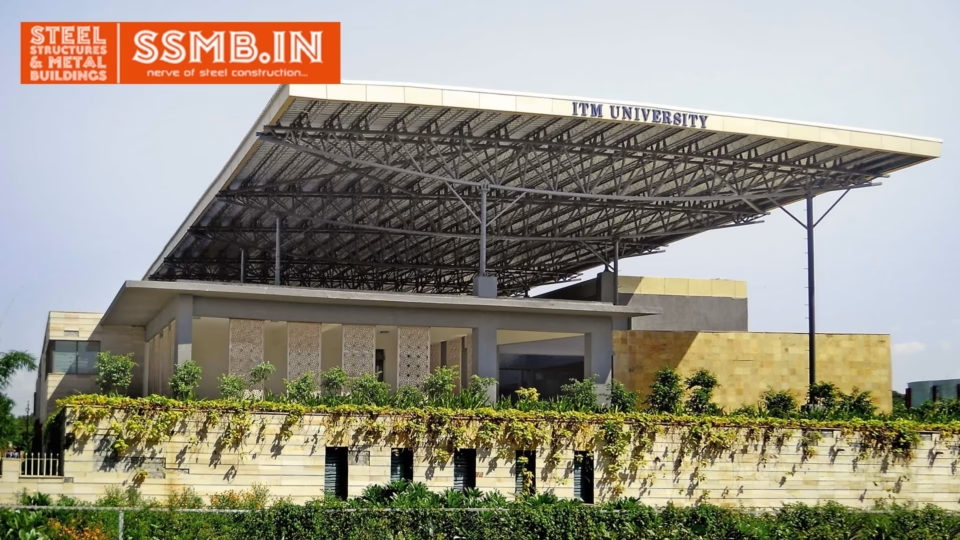
The ITM School of Business in Gwalior, designed by MOFA, integrates tradition and modernity through parametric design. Using locally sourced white Dholpur sandstone, it maintains low environmental impact while preserving local heritage. The structure adapts to Gwalior’s hot, humid climate with parasol roofs and jaalis. Engineers from Roark Consulting resolved complex geometries into a constructible two-floor concrete SMRF frame topped with a skewed steel canopy.
House B123 by MOFA Studios in New Delhi is a multi-generational home designed to unite three generations under one roof while maintaining individual privacy. Centered around a luminous courtyard with a glass plunge pool and skylight, the house connects all levels through cut-outs, bridges, and visual links. Its inward-looking design balances exposed concrete, reclaimed wood, and steel artistry, creating a dynamic, light-filled home that celebrates family, heritage, and modern living.
House B123 in New Delhi, designed by M:OFA Studios, is an 11,500 sq. ft. joint family home spread over five levels. With a compact 300 sq. yard plot, the design emphasizes verticality and interconnectivity, featuring an atrium for visual links between floors. The façade and interiors use exposed concrete and reclaimed wood. Public and private spaces are carefully balanced, while a custom yellow staircase adds vibrancy, reinterpreting traditional Indian architecture for contemporary family living.
The Golden Tusk Resort by M:OFA Studio is a true agro-resort designed to immerse urban travelers in authentic rural life. Surrounded by nature, its cottages use local materials in a contemporary style. Guests can engage with farm life through activities like poultry care, cattle feeding, fish farming, and elephant rides. The design emphasizes sustainability with local stone masonry and reclaimed wood carpentry, blending comfort with ecological responsibility.
Tanushree Gulati of M:OFA Studio, New Delhi, admires designer Ruchika Grover of Odyssey for her innovative work with stone. She believes true design excellence stems from passion and innovation — qualities that elevate creation beyond convention. For Tanushree, such dedication reflects a designer’s deep commitment to their craft and marks the journey of pushing creative boundaries.
The ITM School of Business in Gwalior by M:OFA Studios blends sustainability with tradition. Using locally sourced Dholpur sandstone, it reflects regional heritage while maintaining a low environmental footprint. A lightweight steel parasol roof enables natural cooling through convection. Jaali screens filter light and reduce heat, combining traditional craftsmanship with modern detailing. The design creates an economical, climate-responsive, and green institutional building suited to Gwalior’s hot climate.
In India’s harsh climate, facades and roofing systems are crucial not just for aesthetics but for climate response. They act as a barrier between exterior heat, dust, and humidity while allowing light, ventilation, and breathability. Materials like terracotta, louvers, rain façades, and insulated panels enable passive cooling. When selecting materials, aesthetics, durability, local availability, and cost-efficiency must be balanced to ensure long-term performance and sustainability.
“Pensieve,” an installation by Manish Gulati at ID 2014, drew inspiration from the “memory basin” in Harry Potter. Built from over 1,200 discarded shipping pallets, it symbolized Delhi’s ruins and their overgrown beauty. The grass-covered structure, created in five days using composted waste, became a public space for reflection and dialogue—bringing art to the people and promoting cultural growth beyond galleries.
The National Institute of Fashion Technology (NIFT) campus in Kangra, designed by M:OFA Studio, was a winning entry in a 2009 national competition. Planned as a zero-discharge green campus on hilly terrain, the design integrates existing banyan, mango, and silver oak trees. Inspired by fashion design’s artistic expression, M:OFA wove the architecture into its natural surroundings, reflecting agricultural fields and organic urban growth through fluid, textural forms.
M:OFA Studio (Manifestation of Fluid Architecture), founded in 2007 by Manish and Tanushree Gulati in New Delhi, champions sustainable, adaptive design. Their work ranges from the nature-integrated NIFT Kangra campus to the dynamic, recycled-material interiors of the Delhi Daredevils office, reflecting innovation, contextual sensitivity, and fluid architectural thinking.
The Delhi Daredevils’ new office, designed by M:OFA in Delhi, embodies the team’s vibrant identity and dynamic energy. The concept merges work, play, and meeting spaces to create a continuous flow of sporting enthusiasm. At its core lies the Think Tank Lounge, featuring an artistic installation of wooden planks arranged in a swirling pattern, symbolizing motion, creativity, and the team’s energetic spirit.
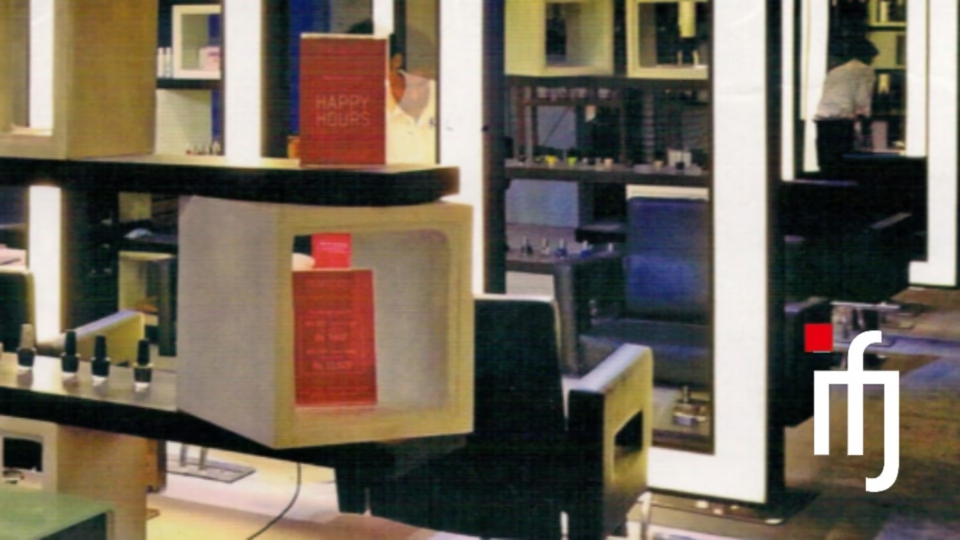
The 3,000 sq.ft. salon is designed as an open, continuous space divided into dry, wet, and spa zones. Using natural, reclaimed materials like exposed concrete, brickwork, and wood from shipping pallets, the design reflects a post-monsoon theme. Exposed ducts and light fixtures made from old “Bhompoos” add character. Built at ₹2,450/sq.ft.—about 50% below market rates—the industrial aesthetic blends sustainability with a distinctive brand identity.
Manish Gulati and his team at M:OFA Studio designed a Delhi home that skillfully accommodates the dynamics of a joint family. Anchored around an open central core that floods all three floors with natural light, the design draws from the traditional courtyard house concept. The plan seamlessly balances private and shared areas, fostering interaction while maintaining individual privacy.